Dongguan Deri Toys Co., Ltd. engineers Montessori-inspired gross motor, fine motor, sensory, language, math, and practical-life learning toys for global brands, distributors, schools, and early-childhood programs.
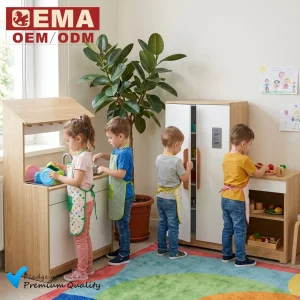
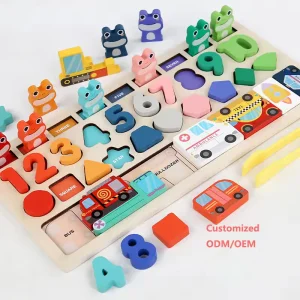
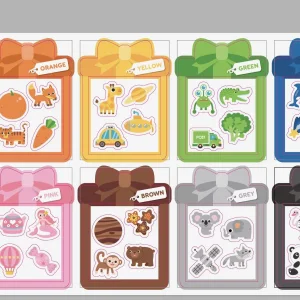
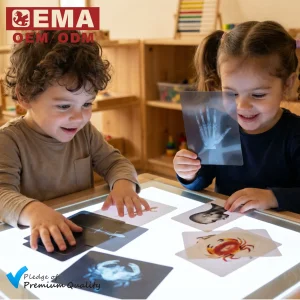
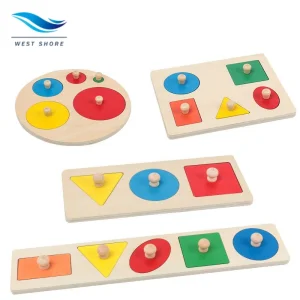
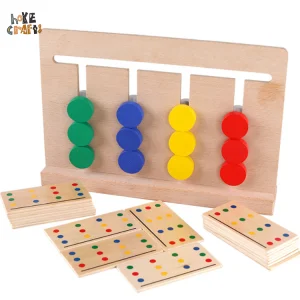
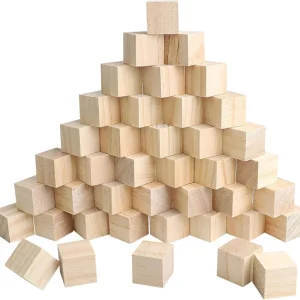
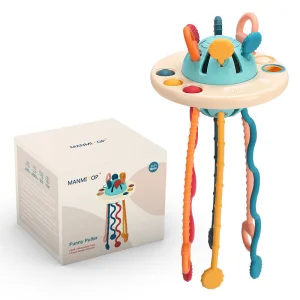
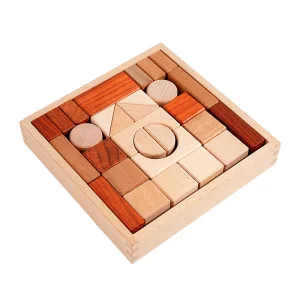
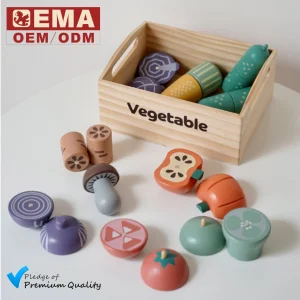
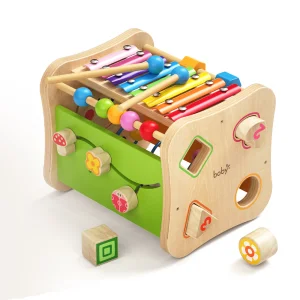
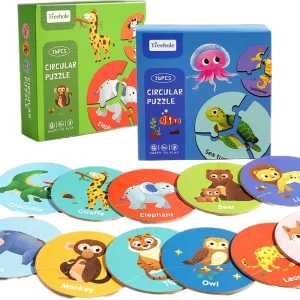
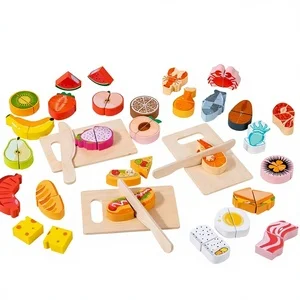
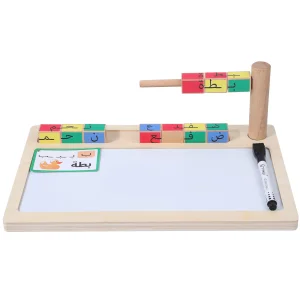
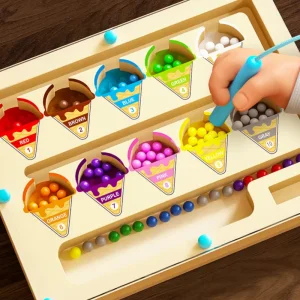
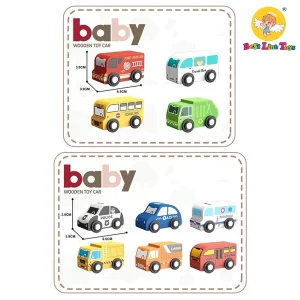
These eight products represent the practical side of the portfolio: wooden construction, sensory learning, early language and math readiness, pretend play, and coordinated movement. Each product URL is retained for direct catalog access.
The query “OEM/ODM Montessori Gross Motor Skill Toys Manufacturer & Supplier” carries four commercial intents at once: supplier verification, custom manufacturing capability, Montessori pedagogical credibility, and evidence of child-safe production. A catalog alone cannot satisfy that intent. The content must show how pedagogy becomes engineering.
For global buyers, a Montessori gross motor skill toy is not simply a wooden object with a child-friendly appearance. It is a deliberately designed movement invitation. It may encourage balance, reaching, carrying, squatting, turning, bilateral coordination, crossing the midline, whole-hand strength, controlled release, postural stability, and spatial judgment. In a manufacturing brief, those outcomes must be translated into dimensions, weight distribution, wood grain direction, edge radius, surface friction, joinery strength, finish safety, packaging, and age-graded warnings.
Dongguan Deri Toys Co., Ltd. operates as a professional Montessori Learning Toy Manufacturer and China supplier. Its strength is not limited to making wooden toys; it is the ability to align product design, hand-sample iteration, material selection, quality control, branding, packaging, and international market requirements into one development route. For distributors, retailers, educational institutions, and global brands, this reduces the gap between a good idea and a retail-ready product family.
The information gain of this page is a buyer-oriented framework: pedagogy first, engineering second, compliance third, localization fourth, and lifecycle support last. This sequence protects the educational purpose of the toy while keeping the project commercially practical. It also helps procurement teams compare suppliers beyond unit price, because the real cost of an inferior gross motor toy appears later in returns, compliance delays, damaged cartons, unclear age grading, and weak sell-through.
Every concept begins with a developmental objective: balance, coordination, practical-life sequencing, sensory discrimination, or early math and language readiness.
Product geometry, material thickness, joinery, sanding, finish, and packaging are defined around the target age band and usage environment.
Risk points are considered before sampling: small parts, edge radius, stability, paint adhesion, fastener security, and carton transit.
Documentation pathways can be planned for destination markets, including labeling, age grading, material declarations, and test coordination.
Multilingual inserts, retail-ready cartons, barcodes, warning text, lesson cards, and brand storytelling are prepared for local channels.
OEM and ODM routes support sampling, branding, packaging, and manufacturing for distributors and private-label programs.
Montessori practice treats movement as part of cognition, not as a break from learning. A child who carries, balances, sorts, pours, stacks, opens, closes, reaches, and coordinates both hands is building concentration, independence, and self-regulation at the same time.
A well-designed gross motor toy should isolate a quality of movement. It should offer a clear purpose, a visible control of error, and an invitation to repeat. For a toddler, that may mean a pull-string activity that supports grasp and reach while introducing cause and effect. For a preschool child, it may mean a color-sorting puzzle that combines hand-eye coordination with classification. For an older early-childhood learner, it may mean a multi-step practical-life or building activity that requires planning, balance, and cooperative play.
From a manufacturing standpoint, this pedagogical sequence becomes a product roadmap. A supplier must understand that a toy intended for ages 1–2 cannot be treated as a smaller version of a toy for ages 4–6. The grip diameter, part size, weight, finish texture, opening force, and packaging warnings must change with the user. That is where an experienced Montessori educational toy manufacturer adds real value: it can challenge weak design assumptions before tooling and production.
Deri Toys’ portfolio covers Montessori educational toys, wooden toys, sensory learning toys, practical life learning materials, fine motor skill development toys, language learning resources, mathematics learning toys, cognitive development products, sorting and matching activities, preschool educational toys, and early-childhood learning solutions. The product mix reflects the interlocking nature of early development: gross motor movement supports fine motor control; fine motor control supports practical life; practical life supports concentration; concentration supports language and math readiness. A serious OEM/ODM program should treat these as a system, not as isolated SKUs.
The chart is an illustrative curriculum-alignment snapshot based on the portfolio mix described on this page. It is not a safety, testing, or performance certification.
The educational toy market continues to shift toward screen-free, durable, open-ended materials. Montessori-inspired products sit at the intersection of parental aspiration, early-childhood pedagogy, sustainability expectations, and retail differentiation.
In North America and Europe, parents and schools often look for toys that support school readiness without turning play into a screen-based drill. In Southeast Asia and the Middle East, distributors and institutions seek reliable supply, flexible packaging, and product ranges that can be localized for bilingual or multilingual classrooms. Across all regions, buyers are consolidating suppliers that can manage OEM and ODM development, compliance documentation, and multi-market packaging rather than purchasing isolated containers of unbranded goods.
The manufacturing base around Dongguan and the Pearl River Delta remains highly relevant for wooden educational toys because it combines woodworking, sanding, finishing, hardware, printing, packaging, and export logistics in a mature supply ecosystem. However, the competitive advantage is no longer only speed or cost. International retailers and importers increasingly ask for material traceability, low-VOC finishes, stable color matching, replacement-part strategies, clear age grading, and documentation that can survive compliance review. A supplier that treats compliance as a last-minute document request is a risk; a supplier that designs compliance into the product is a partner.
Commercially, the category is moving from “cute wooden toy” to “curriculum-linked learning system.” Brands want products that can be explained in one sentence on a retail listing and in five minutes on a teacher-training call. That requires manufacturers to supply not only products, but also development rationale, care instructions, warning text, photography support, carton specifications, and repeatable quality standards. The winning supplier is therefore a Montessori gross motor skill toys supplier with product-development discipline, not just a wood workshop.
OEM manufacturing follows the buyer’s specification. ODM development adds concept creation, structural thinking, material selection, packaging direction, and market-ready differentiation. Dongguan Deri Toys supports both routes for global brands, distributors, schools, and private-label programs.
A practical OEM/ODM program begins with the use case, not the product photo. Who will use the toy: a toddler at home, a Montessori preschool, a kindergarten, a therapy setting, or a retailer’s seasonal program? What is the target age band, retail price, carton size, and channel? Which learning outcome should the product make visible to parents and teachers? Once those answers are clear, engineering can decide whether the right solution is a single-objective material, a modular activity box, a multi-piece sorting set, or a large-format wooden movement piece.
Macro-level industry solutions include modular product architecture, shared components across SKUs, differentiated wood finishes, localized packaging, and curriculum-linked inserts. Modularity is especially valuable for brands that need several market variants without paying for completely separate tooling. A common core structure can be paired with different color palettes, sorting boards, language cards, and packaging to serve multiple regions or age bands.
Define the learning outcome, target age, retail channel, compliance market, packaging needs, and visual brand direction before sampling.
Translate the concept into wood species, dimensions, joinery, finish, edge treatment, assembly, and cost architecture.
Review appearance, feel, strength, small parts, finish adhesion, packaging fit, and educational clarity through iterative samples.
Execute controlled production, quality checks, multilingual labeling, carton preparation, and shipment documentation.
The following company profile is preserved from the original source content and forms the core trust layer for this page. It is presented here in a structured layout without removing the original statements.
Dongguan Deri Toys Co., Ltd. is a professional Montessori Learning Toy Manufacturer dedicated to developing high-quality educational products that support children's natural growth and learning. As a trusted China supplier, we specialize in designing and manufacturing Montessori educational toys that encourage independent thinking, hands-on exploration, creativity, and cognitive development.
Our product portfolio includes Montessori educational toys, Montessori wooden toys, sensory learning toys, practical life learning materials, fine motor skill development toys, language learning resources, mathematics learning toys, cognitive development products, sorting and matching activities, preschool educational toys, and early childhood learning solutions. Every product is carefully designed to align with Montessori principles, helping children learn through self-directed discovery and meaningful play experiences.
At Deri Toys, quality and safety are our highest priorities. We use carefully selected, child-friendly materials and implement comprehensive quality control procedures throughout every stage of production. Our commitment to manufacturing excellence ensures that all products meet international safety requirements and deliver reliable performance for educational institutions, retailers, distributors, and global brands.
Driven by innovation and educational expertise, our experienced R&D team continuously develops new learning products that meet the evolving needs of modern families, schools, kindergartens, and Montessori learning centers. We provide flexible OEM and ODM services, offering customized product development, branding, packaging, and manufacturing solutions tailored to diverse market demands.
With a strong focus on quality, innovation, and customer satisfaction, Dongguan Deri Toys Co., Ltd. has established long-term partnerships with customers across North America, Europe, Southeast Asia, the Middle East, and other international markets. Our educational products are designed to support children's intellectual, social, emotional, and practical skill development while fostering a lifelong love of learning.
As a reliable global partner in the educational toy industry, Dongguan Deri Toys Co., Ltd. remains committed to delivering innovative Montessori learning solutions that empower children to explore, discover, and grow through purposeful play.
The next stage of growth will not be driven by adding screens to Montessori toys. It will be driven by better materials, stronger modular engineering, cleaner compliance data, and smarter behind-the-scenes support for buyers and educators.
Horizon 1: material and process upgrades. Buyers increasingly request responsibly sourced wood, water-based low-VOC finishes, consistent color matching, precision sanding, and repeatable joinery. Manufacturers that can document material selection and process control will be preferred for premium retail and institutional programs. Clean, simple finishes are also more aligned with Montessori sensorial values: the child should feel the material, not a thick decorative coating.
Horizon 2: modularity and localization. Product families can share a core structure while adapting panels, cards, sorting pieces, packaging language, and retail display for each market. This supports faster launches for distributors and lowers the cost of market-specific variants. QR-linked lesson guides, replacement-part programs, and parent-education inserts can extend the product beyond the box without changing the open-ended nature of play.
Horizon 3: digital support behind the scenes. 3D configuration files, digital product passports, compliance dashboards, and AI-assisted demand analytics can help brands plan assortment and reduce development cycles. The child-facing experience should remain tactile, screen-free, and movement-rich. Technology belongs in the supply chain, not in the middle of the Montessori work cycle.
Clear wood sourcing, finish declarations, and supplier documentation support premium and regulated market requirements.
Shared platforms and interchangeable components help brands build multiple SKUs with disciplined tooling investment.
Multilingual packaging, inserts, warning text, teacher notes, and market-specific retail presentation can be planned early.
Batch records, care instructions, test references, and replacement-part information can be linked to product lines.
Localization is not a translation layer added at the end. It affects product geometry, age grading, warning text, packaging structure, retail listing claims, and the documentation package that accompanies each shipment.
For North America, buyers commonly plan around ASTM F963 and CPSIA-related requirements. For Europe, EN71 and REACH-related material declarations are central considerations. For other regions, ISO 8124 or destination-specific requirements may apply. A responsible supplier does not simply promise “compliance”; it maps the product against the target market, identifies test needs, confirms materials and finishes, prepares labels and warnings, and keeps batch records so that future questions can be answered.
Dongguan Deri Toys supports OEM and ODM projects for customers across North America, Europe, Southeast Asia, the Middle East, and other international markets. For a new project, the practical localization package may include multilingual packaging, barcode and carton marking, age grading, safety warnings, care instructions, product naming, photography guidance, and curriculum-linked inserts. Final compliance always depends on the specific product design, materials, testing scope, and destination regulations, so the earlier those details are shared, the more efficient the development route becomes.
Target-market requirements are reviewed before sampling so that materials, labels, and test plans are not retrofitted later.
Child-friendly materials, finish selection, color consistency, and surface performance are aligned with product use and market expectations.
Warning text, age grading, multilingual inserts, retail cartons, barcodes, and brand assets can be prepared for local channels.
Production records, inspection notes, and packaging references support after-sales questions and repeat-order consistency.
Montessori gross motor and skill-building toys are used across homes, schools, clinics, retail channels, and institutional programs. The same product may require different packaging, instructions, and merchandising depending on the application scenario.
For a home-learning buyer, clarity and safety reassurance matter most. For a Montessori preschool, the product must support independent repetition and fit the prepared environment. For a kindergarten or daycare, durability and group-use practicality become more important. For sensory and therapy-adjacent settings, tactile variety, graspability, and graded challenge are valuable. For retailers and e-commerce sellers, shelf appeal, carton efficiency, return resistance, and listing-ready images drive commercial success.
Clear learning purpose, parent-friendly instructions, safe edges, and compact storage make the product easier to adopt at home.
Single-objective materials, control of error, and repeatable movement support the prepared environment and independent work cycle.
Sturdy construction, group-safe design, easy cleaning, and efficient storage matter in daily institutional use.
Tactile contrast, graspability, bilateral coordination, and graded challenge can support sensory-rich learning activities.
Retail-ready packaging, consistent photography, barcode compliance, and return-resistant cartons improve sell-through and reduce friction.
Range planning, carton efficiency, multilingual inserts, and repeat-order consistency help distributors serve multiple channels.
Experience is demonstrated through process, not adjectives. A qualified Montessori toy supplier should be able to explain what is inspected, when it is inspected, what happens when a nonconformity is found, and how that record follows the batch.
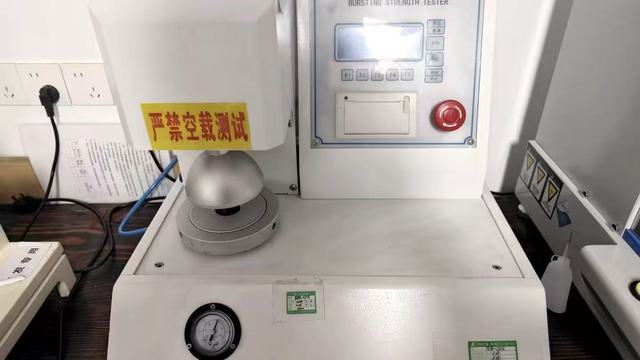
At Deri Toys, quality and safety are described as the highest priorities. This should be reflected in incoming material review, in-process checks, finish inspection, assembly verification, packaging validation, and final inspection. For wooden educational toys, practical checks may include wood condition, moisture-related stability, sanding quality, edge radius, color consistency, paint or finish adhesion, hardware security, small-parts risk, product stability, and carton protection. The exact inspection plan depends on the product, age band, and destination market.
An experienced R&D team also acts as a risk filter. It can question a design that looks attractive in a 3D image but is difficult to sand safely, unstable in use, or inefficient to pack. It can propose a modular alternative that preserves the learning objective while improving manufacturing yield. This is the practical meaning of E-E-A-T in this category: educational understanding, manufacturing experience, documented authority, and reliable execution.
Wood, finish, hardware, and packaging inputs are checked against project requirements before production begins.
Dimensions, sanding, joinery, appearance, and assembly are monitored during production to prevent repeated defects.
Final checks focus on function, safety-critical details, finish, labeling, packaging, and carton readiness.
Project specifications, sample approvals, inspection notes, and packaging references support repeat orders and traceability.
These answers address common commercial, pedagogical, and compliance questions. For project-specific decisions, the final scope should be confirmed against drawings, target age, materials, packaging, and destination market requirements.
A Montessori gross motor skill toy invites purposeful whole-body movement such as balancing, reaching, carrying, squatting, turning, coordinating both hands, or controlling release. In manufacturing terms, that means the product must be designed around dimensions, weight, stability, grip, edge safety, and age-appropriate challenge, not just visual style.
Yes. The company supports customized product development, branding, packaging, and manufacturing solutions. A practical project brief should include the target age, learning objective, reference products, material preferences, finish direction, packaging language, target market, and estimated order plan.
Portfolio experience references North America, Europe, Southeast Asia, the Middle East, and other international markets. Depending on the project, discussions may include documentation pathways for standards such as EN71, ASTM F963, CPSIA, ISO 8124, and REACH-related material declarations where applicable. Final compliance depends on the exact product, test plan, and destination.
Quality and safety are treated as core priorities through carefully selected, child-friendly materials and quality control procedures throughout production. Project-specific checks may cover material condition, sanding, edge treatment, finish adhesion, hardware security, small parts, assembly strength, and final packaging.
The usual route is brief review, concept and engineering, sample making, sample approval, production planning, quality inspection, packaging, and shipment. Sampling requirements, MOQ, tooling, and lead time are project-dependent and should be confirmed after the product specification is clear.
Yes. Localization can include multilingual packaging, warning text, age grading, care instructions, lesson cards, retail carton markings, barcodes, and brand storytelling. These elements should be planned early because they affect artwork, carton size, compliance labeling, and production scheduling.
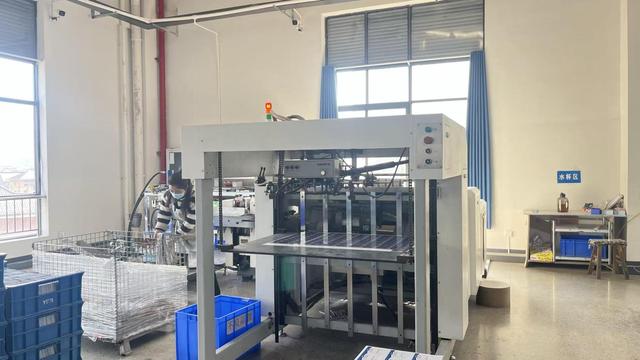
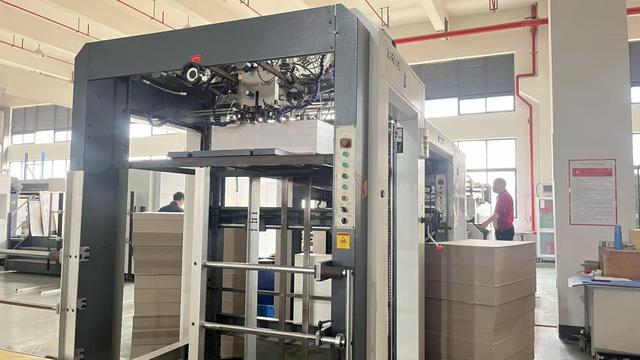
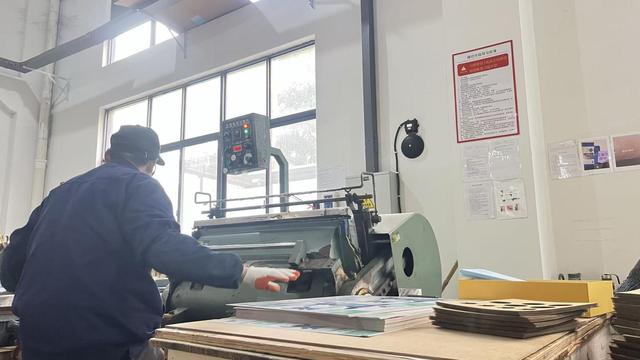
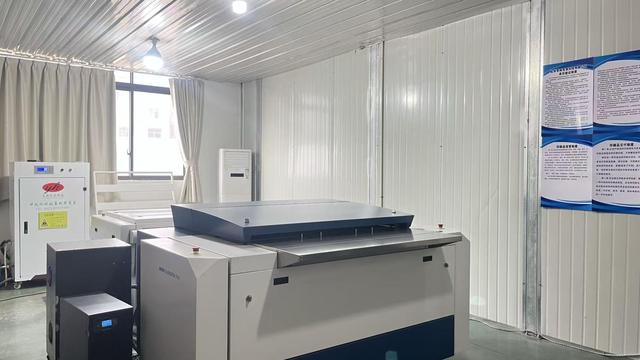
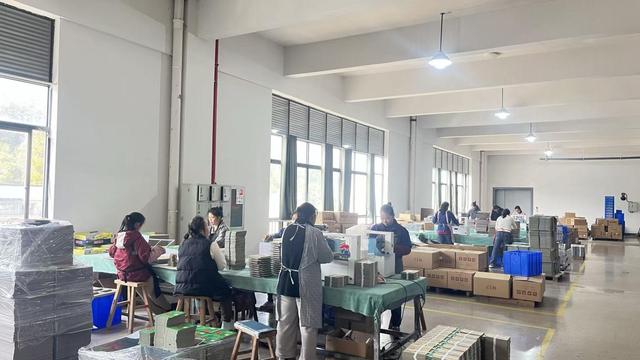
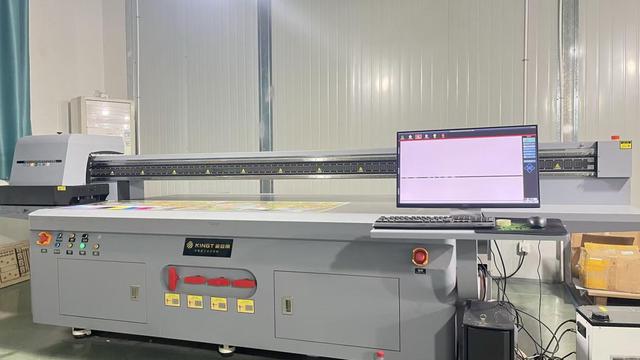
The original gallery images are retained below to support visual verification, product detail review, and manufacturing-context evaluation. Images are displayed proportionally with contained fitting for complete visibility.
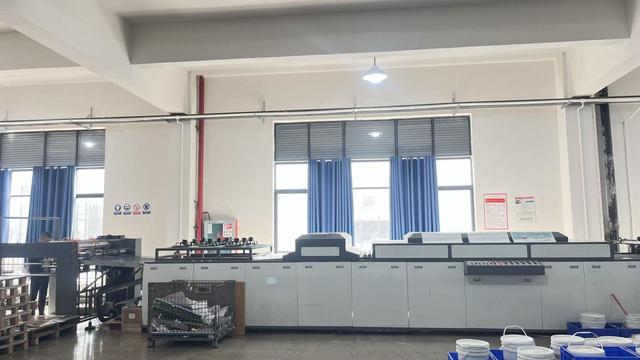
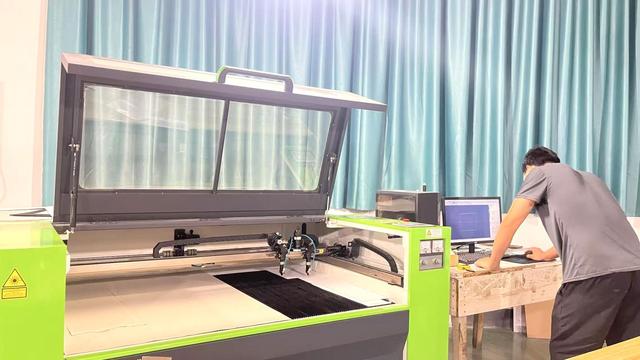
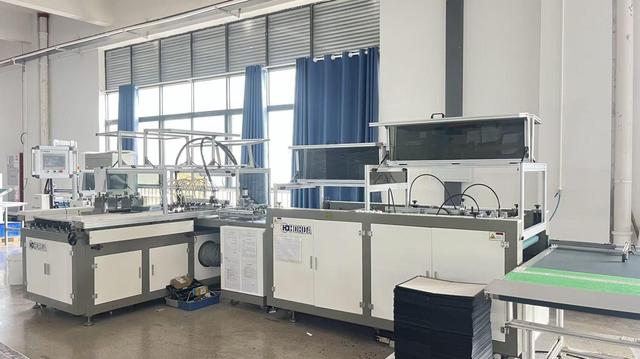
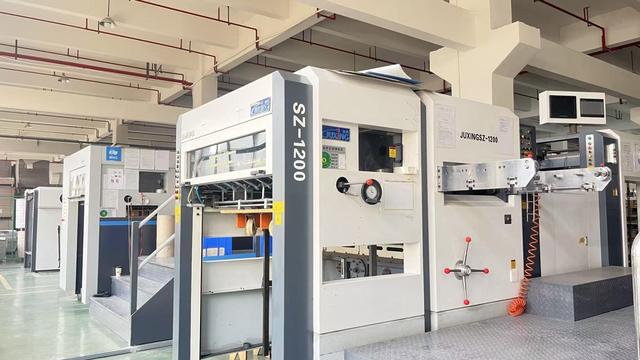
The remaining eight featured products complete the portfolio view, covering building blocks, play food, activity boxes, puzzles, language learning, magnetic number mazes, and wooden vehicle sets. Original product URLs are preserved and styled as clear catalog buttons.
 Deri Toys