A wooden ring sliding onto a peg can hold a toddler’s attention longer than a flashing toy. Small details matter. Many caregivers ask “why are montessori toys so popular” when they see children choosing simple objects and repeating the same actions. These toys often use familiar materials, clear shapes, and hands-on tasks. A child might stack cups, fit a puzzle piece, or pour beans between small containers under an adult’s supervision. The activity is straightforward, but it invites practice.
This article explores ten reasons families and educators are drawn to Montessori-inspired toys. It considers how open-ended play can support concentration, coordination, problem-solving, and growing independence. It also looks at practical details, such as durability, age suitability, and whether a toy offers enough challenge without creating frustration. These benefits depend on the child and the setting. A wooden toy is not automatically educational, and a child may prefer a noisy pretend-play set instead. That is normal.
The Montessori label can also be used loosely in product descriptions, so buyers should look beyond the name. Check for safe construction, clear age guidance, and materials that suit your child’s abilities. Observe how the child actually plays. A toy that is beautiful on a shelf may be ignored on the floor. The reasons below offer a useful starting point, not a promise that every toy will work for every family.
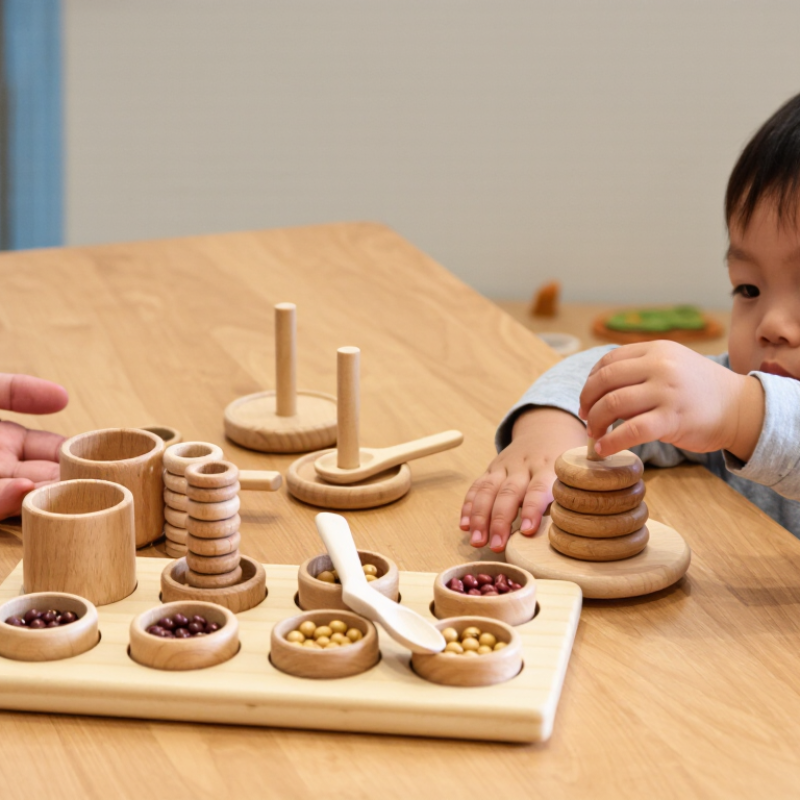
A Montessori toy is defined less by its material or appearance than by how a child can use it. It should invite hands-on exploration, support a clear skill, and let the child act with increasing independence. A wooden shape sorter may fit, but only if its pieces are manageable and its challenge suits the child. Simple does not automatically mean educational. Nor does a natural finish make a toy Montessori.
The design matters. Look for sturdy, child-sized pieces, a clear purpose, and room for trial and error. A child might grasp a knob, match a cylinder, or pour beans between small pitchers. Repetition is part of the work. The American Academy of Pediatrics’ 2018 clinical report, “The Power of Play,” links play with language, social, and cognitive development. UNICEF’s early-childhood guidance also notes that about 90% of brain development occurs by age five. These figures support rich early experiences, not a claim that any one toy guarantees learning. Labels can be overused. A toy that frustrates a child or leaves no space for imagination may miss the point, even if it looks beautifully simple.
Montessori-inspired toys are popular partly because they make learning visible. A child fitting a wooden cylinder into the right opening can see and feel when it works. There is no flashing light to announce success. The child notices the result. This reflects a key Montessori principle: learning through purposeful, hands-on activity.
A simple pouring set, for example, invites practice with grip, balance, and concentration. Spills happen. That is part of the work, though it can test an adult’s patience.
Many such toys offer one clear challenge at a time. A shape puzzle or set of nesting cups lets children repeat an action and gradually adjust their approach. Some materials also provide gentle feedback, so a child can spot an error without constant correction.
That supports independence, not isolation; a calm adult can observe, offer help, then step back. The details matter. A toy should suit the child’s age and abilities, and its materials should be safe and durable.
Not every plain wooden object is meaningfully educational. And no toy can replace conversation, movement, or shared play. Montessori learning is less about owning special objects than preparing an inviting space where children can choose, explore, and try again.
Montessori toys are popular partly because they invite children to do something, not just watch. A wooden puzzle with chunky pieces lets a toddler grip, turn, and test each shape. Pouring beans between two small cups can build coordination and concentration. The activity looks simple. The thinking is not.
These toys can support independence when children can reach and use them safely. A low shelf with a few choices may help a child select an activity and return it afterward. That small routine gives practice in decision-making and care for shared spaces. Matching cards, stacking blocks, and sorting objects can also encourage early language, spatial awareness, and problem-solving.
Progress may be quiet: a child pauses, tries a different piece, then succeeds. Small wins count.
Still, a toy alone does not teach every skill, and children develop at different speeds. Adults matter. Naming a shape or asking, “What could you try next?” can extend play without taking over. Too much help, however, may turn exploration into a test. It is easy to mistake a calm child for an engaged one; sometimes they are simply tired. I would watch what the child returns to, and adjust the choices when interest fades. A carefully chosen toy can open a useful opportunity, but it cannot replace time, conversation, or patient attention.
Montessori toys are popular because they often let children choose what to explore. That sense of agency can make play feel more personal. Simple designs also reduce visual clutter, helping a child focus on one task. Many toys invite children to move, sort, stack, or fit pieces by hand. Tactile materials, such as smooth wood or textured fabric, add sensory interest. Small details count.
Another appeal is repetition. A child may pour beans between cups or place the same shape again and again, practicing coordination at their own pace. Practical activities, like fastening a button or matching lids, connect play with everyday routines. Open-ended materials can also support different kinds of play as a child’s interests change. There is no single correct way to use every piece.
Many Montessori-style toys are sized for small hands, so children can handle them with less adult help. Their clear purpose can make it easier for caregivers to notice what a child is trying to learn and offer support without taking over. Still, not every child enjoys quiet, focused play, and a toy’s label cannot guarantee its value. I sometimes find a simple object works beautifully one day and gets ignored the next. That is normal. Safety, age suitability, and a child’s actual interest matter more than a specific look.
A qualitative editorial relevance rating of features commonly associated with Montessori-inspired toys. Scores are not survey results or market statistics.
These toys are often valued for encouraging hands-on exploration, independence, and practical skills. Ratings indicate relative editorial relevance on a 1–5 scale, not measured popularity.
For babies under 12 months, choose lightweight rattles, textured cloth, and simple objects they can safely grasp. Keep the play space uncluttered; one basket of reachable items can invite more exploration than a crowded shelf. From ages one to three, try nesting cups, large-piece puzzles, and everyday role-play objects. At three to six, sorting sets, child-sized tools, and open-ended blocks can support longer projects. Age labels help, but children do not follow identical timelines.
The CDC’s 2022 developmental milestone checklists use skills that at least 75% of children are expected to show by a given age. Use them as a guide, not a toy-buying checklist: a child’s interests, abilities, and safe handling matter too. The American Academy of Pediatrics’ 2018 clinical report, “The Power of Play,” describes play as important for learning and relationships. A toy need not teach a named skill to be useful. That part is easy to forget. Notice what a child repeats: pouring beans between containers, for example, may hold attention longer than a complicated activity. Supervision still matters, especially with small pieces. And sometimes the “right” toy gets ignored. That is useful information, too.
It invites hands-on exploration and supports a clear skill. The child should be able to try, repeat, and act with growing independence.
No. Material alone does not define it. A sturdy, child-sized toy with a clear purpose matters more than a natural finish.
Choose manageable pieces and a challenge suited to the child. A knob to grasp or a cylinder to match can offer useful practice.
Repetition lets children practice movements at their own pace. Pouring beans between small cups can build coordination. It can look simple.
No. Some children prefer active or imaginative play. A toy’s label cannot guarantee interest or learning.
Matching lids or fastening a button can make familiar tasks part of play. Small, practical details matter.
That can be normal. A simple object may delight a child one day and sit untouched the next. I might overthink that sometimes.
No single toy guarantees learning. Play can support language, social, and cognitive development, but children need varied, engaging experiences.
Montessori toys are thoughtfully designed materials that encourage children to explore, make choices, and learn through hands-on experience. Often simple, purposeful, and suited to a child’s abilities, they reflect Montessori principles such as independence, concentration, practical learning, and respect for each child’s pace. Rather than directing every step, these toys invite children to experiment, solve problems, and discover how things work.
There are many reasons why are montessori toys so popular: they can support fine motor skills, coordination, language, creativity, confidence, and early reasoning while making learning feel playful. Their focused design can also help children engage deeply without relying on constant stimulation. Families can choose materials according to a child’s age, interests, and current abilities, starting with safe, manageable activities and offering more complex challenges as skills develop. The best choice is one that encourages curiosity and independent exploration without overwhelming the child.
