Parents often ask, “what are montessori learning toys,” and how can they tell useful materials from attractive packaging? In general, these toys invite children to handle, sort, build, pour, or solve problems with growing independence. A wooden shape puzzle, for example, lets a child turn each piece, test its fit, and try again. The learning comes from doing, not from a toy performing every step.
Montessori-inspired play often emphasizes real-world skills, hands-on exploration, simple design, and room for repetition. Still, a label alone does not make a toy a good fit. Age guidance, durable construction, and small-part warnings matter, especially for toddlers. A bead-stringing set may suit one preschooler but frustrate another; children develop at different rates, and interests change quickly. That matters.
This guide explores 10 thoughtfully chosen options, from practical-life activities to early math and language materials. The picks are considered for how clearly they support a skill, whether children can use them with limited adult direction, and how well they invite repeated play. No toy works for every child. Some families may also prefer homemade materials, while others need easy-to-clean or travel-friendly choices. The aim is not to fill a shelf, but to find materials that earn their place through meaningful use. Expect useful guidance, with a little room for individual judgment.
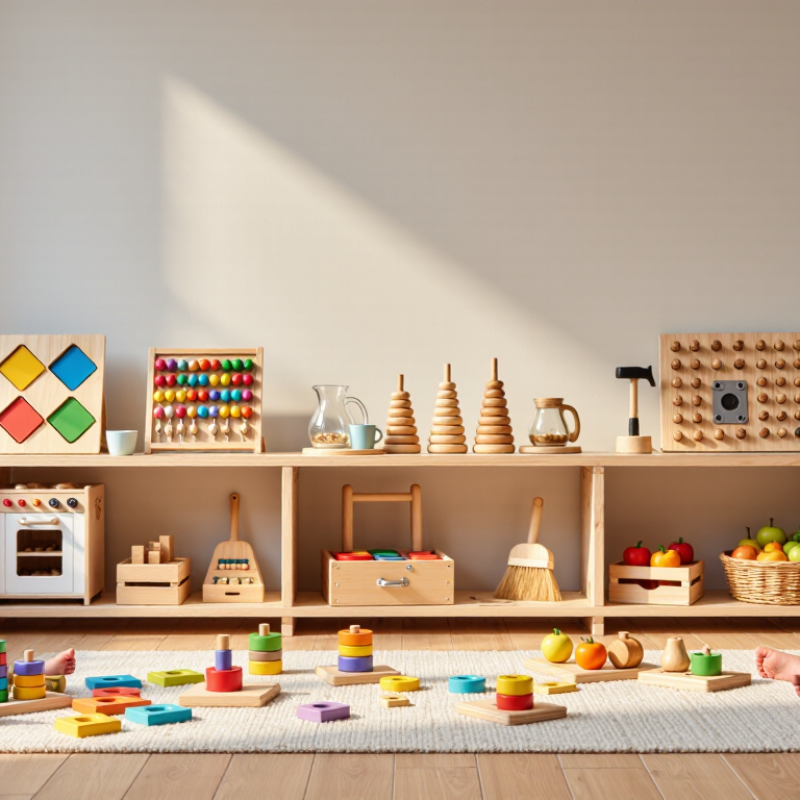
Montessori toy selection works best when it follows a child’s interests and the five curriculum areas, not a trend. Practical life toys invite real actions, such as pouring water between small pitchers or fastening a button. Choose pieces sized for little hands, with simple steps and safe, durable materials. Small steps matter. A child may repeat the same task for days; that repetition is useful practice, not a sign of boredom.
Sensorial materials help children notice differences in texture, shape, sound, weight, or color. Language toys can include picture cards, movable letters, and objects children can name and sort. For mathematics, look for counters, number rods, or beads that make quantity visible. A child can touch each bead while counting. Keep the purpose clear. Too many features can distract from the idea being explored.
Cultural studies toys might include maps, nature specimens, puzzles of landforms, or objects representing daily life in different places. Offer them with accurate, respectful context rather than as decoration. Match the challenge to the child: a puzzle with a few large pieces may suit a beginner better than a detailed map. I still find it tempting to choose the most impressive-looking set. A quieter material may invite longer concentration. Watch how the child uses it, then adjust; the first choice will not always be right.
How Montessori’s Five Curriculum Areas Guide Learning-Toy Selection
| Learning Material | Curriculum Area | Typical Age Range | Learning Focus | What to Look For |
|---|---|---|---|---|
| Pouring and spooning set | Practical Life | 2–4 years | Hand control, concentration, coordination, and completing a purposeful sequence of steps. | Small, easy-to-hold pitchers and spoons; sturdy materials; containers sized for manageable practice. Begin with dry transfers, then introduce water with supervision. |
| Dressing frames | Practical Life | 2½–5 years | Everyday independence and the fine-motor movements used for buttons, zippers, snaps, or laces. | Choose one fastening type at a time and a frame that stays stable on a table. Demonstrate slowly, then allow the child to repeat independently. |
| Child-size tongs and transfer objects | Practical Life | 2½–5 years | Coordination, controlled movement, and preparation for later tool use and writing movements. | Use tongs that fit the child’s hand and objects too large to swallow. Select safe, unbreakable pieces and supervise young children. |
| Knobbed cylinder blocks | Sensorial | 3–5 years | Visual discrimination of dimensions such as height and diameter, along with careful observation and hand control. | Look for smooth, consistently sized cylinders with easy-to-grasp knobs. The pieces should fit their matching openings without force. |
| Color tablets or color-matching cards | Sensorial | 2½–5 years | Noticing, matching, and naming colors; more advanced sets can introduce shades and gradations. | Start with a small number of distinct colors, then add more subtle shades as the child is ready. Keep the pieces clean and organized. |
| Sandpaper letters | Language | 3–5 years | Connecting letter shapes with their sounds through visual, tactile, and spoken experiences. | Choose clear, well-formed letters with a tactile surface. Introduce a few letters at a time and use the letter sounds as well as names. |
| Movable alphabet | Language | 4–6 years | Building words and expressing ideas with letters before handwriting is fully developed. | Use distinct, easy-to-handle letters and a tray or mat for organization. Pair the material with familiar spoken words and adult guidance. |
| Number rods | Mathematics | 3½–6 years | Understanding number quantity and sequence by matching counted sections to number names. | Look for rods with clearly alternating sections and a stable, safe finish. Present them on a clear floor or table space for arranging and counting. |
| Spindle box or counting objects | Mathematics | 4–6 years | Connecting written numerals with quantities and exploring the idea that zero represents none. | Choose a set with clearly marked compartments and enough loose objects for counting. Ensure small pieces are appropriate for the child’s age and supervised. |
| Puzzle map or land-and-water globe | Cultural Studies | 3–6 years | Exploring geography, spatial relationships, continents, landforms, and the wider world. | Start with a simple, durable representation and clear labels or color coding. Connect the material to maps, photographs, stories, and the child’s surroundings. |
Selection note: Age ranges are approximate, not developmental deadlines. Choose materials that match the child’s interests and abilities, and follow the maker’s safety guidance; supervise activities involving water, small parts, or tools.
Follow the child’s interests and the skill being explored. A quiet, simple material may hold attention longer than an impressive set.
Small pitchers invite careful pouring. Dressing frames offer button and zipper practice. Small steps matter.
They help children compare texture, shape, sound, weight, and color. Knobbed cylinders, for example, offer different sizes to handle.
Picture cards and movable letters encourage naming and sorting. Number rods, counters, and beads make quantities easier to see and touch.
Grasping toys, stacking blocks, simple puzzles, and shape sorters invite movement and repetition. Offer a few safe, age-appropriate pieces at a time.
Pouring sets, dressing frames, tactile letters, and number rods support coordination and early learning. Readiness varies; familiar work still has value.
Check its age guidance and warnings. Inspect seams, paint, cords, and small parts. Look for splinters or loose puzzle knobs, too.
Observe before stepping in. The child may need more time, or the material may not fit yet. My first choice can be wrong.
What are montessori learning toys, and how can they support a child’s development? This guide explains how to choose purposeful toys that connect with Montessori’s five curriculum areas: Practical Life, Sensorial, Language, Mathematics, and Culture. It considers the different needs of children from birth to age three and from ages three to six, emphasizing hands-on exploration, growing independence, and activities suited to each stage. The three-year classroom cycle also offers a useful perspective: children can revisit familiar materials as their skills and understanding deepen.
The guide highlights ten types of learning toys, from pouring and sorting activities to sound, letter, counting, and nature materials. Rather than focusing on age labels alone, it encourages caregivers to consider a toy’s challenge, adaptability, and opportunities for purposeful practice. It also outlines how ASTM F963 and CPSC requirements can help adults evaluate toy safety, alongside practical checks for age suitability, construction, and small parts.

 Deri Toys
