What Montessori Toys Are Suitable for Toddlers in China?

Time:2026-09-21 Author:Oliver
0%

Choosing toys for toddlers in China requires more than following a popular parenting trend. Families often ask, “what montessori toys are suitable for toddlers,” especially when homes have limited space, busy routines, and different cultural expectations. Suitable choices usually support practical movement, simple problem-solving, language, and independent exploration.

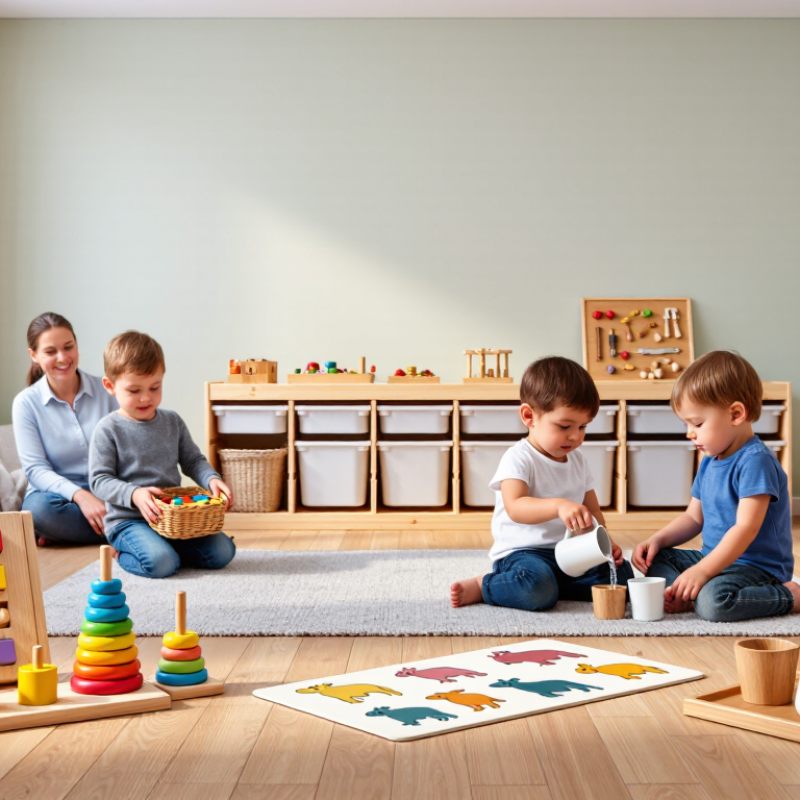
A wooden shape sorter, stacking rings, cloth dressing frame, low puzzle, or small pouring set can offer meaningful practice. A toddler may carry a basket, match objects, or pour water into a cup. These ordinary actions can build coordination and confidence. However, the toy should match the child’s age, strength, attention span, and current interests. Simple is useful.

Safety must remain central. Parents should check for secure parts, smooth surfaces, non-toxic finishes, and clear age guidance. Small pieces can create serious choking risks. Chinese families should also consider product labels, reputable suppliers, and applicable national safety requirements. Early-childhood educators and pediatric specialists generally recommend active supervision, even with apparently simple materials.

This guide draws on Montessori principles, child-development knowledge, and practical observations from toddler play. It does not claim that every wooden toy is educational. Some beautiful toys become clutter. Some children dislike them. That matters. A respectful approach watches the child, adjusts the environment, and accepts that progress may look quiet: one careful pour, one completed puzzle, or a child returning a toy independently. The best choice is not always the most expensive one. It is the one that encourages safe, purposeful action.
What Montessori Toys Are Suitable for Toddlers in China?

Montessori Principles for Toddler Toys

What Montessori Toys Are Suitable for Toddlers in China?

Montessori principles begin with real experiences, not bright labels or electronic effects. A suitable toy should invite one clear action, such as pouring, sorting, threading, or matching. It should fit small hands and offer a visible challenge. A wooden spoon, metal cup, fabric basket, or simple knob puzzle can support independence. Natural materials are helpful, but they are not mandatory. Purpose matters more than appearance.

In a Chinese apartment, space and noise deserve attention. Choose toys that store easily and connect with daily life, such as transferring beans with supervision or folding a small towel. Avoid tiny loose parts. China’s toy safety standard GB 6675 sets requirements for mechanical and physical risks. WHO’s 2019 guidelines recommend no sedentary screen time for children under two. UNICEF’s Learning through Play report also emphasizes active, meaningful interaction. These reports support hands-on play, though they cannot decide every family’s best choice.

Tips: Offer only three or four toys at once. Place them on a low shelf. Demonstrate slowly, then step back. I once filled a shelf with “educational” toys; my toddler touched everything and finished nothing. That mistake still reminds me that less can be more. Observe the child’s grip, patience, and repeated interests. Rotate items when curiosity fades, not on an adult’s fixed schedule. Keep cultural details familiar, including cups, cloths, foods, and household routines.

Developmental Skills Toddlers Need to Build

What Montessori Toys Are Suitable for Toddlers in China?

Toddlers need toys that build practical skills, not just provide noise and color. In Chinese homes, simple wooden puzzles, stacking cups, threading cards, and child-sized kitchen tools can support hand-eye coordination. A small pouring set helps children control movement while transferring water between two cups. It may create spills. That is part of learning.

Language and problem-solving also grow through purposeful play. Picture cards showing family members, local foods, animals, or transport can encourage naming and conversation. Sorting objects by color, shape, or size strengthens early thinking. Open-ended blocks allow children to build towers, bridges, and imaginary homes. Parents should observe quietly before offering help. I sometimes step in too quickly, which can reduce a child’s chance to solve a problem independently.

Tips: Choose one skill at a time. Check that pieces are too large to swallow and free from sharp edges. Offer toys on a low shelf, with only a few choices visible. Rotate them when interest fades. Watch how your toddler uses each toy, rather than following the expected method. A child may use a basket as a drum or a puzzle piece as a pretend phone. That use is not always wrong. Avoid small loose parts around younger toddlers, and supervise water or kitchen activities closely.

Suitable Montessori Toy Categories for Toddlers

What Montessori Toys Are Suitable for Toddlers in China?

Suitable Montessori Toy Categories for Toddlers

For toddlers, practical-life toys can support real daily skills. Wooden pouring sets, child-sized brushes, dressing frames, and simple food-preparation tools encourage careful movement. Choose lightweight materials with smooth edges and easy-to-clean surfaces. Small parts need care. Sensorial toys also work well, especially shape sorters, nesting cups, texture boards, and matching cards. These materials help children notice size, color, sound, and texture without overwhelming them.

Fine-motor toys are useful for ages 18 to 36 months. Peg boards, large beads, knob puzzles, and simple threading activities strengthen hand control. Open-ended blocks allow children to build houses, bridges, or imaginary markets. Movement-based choices matter too. Low climbing structures, balance paths, and push toys can support coordination in a safe home area. In China, many families live in compact apartments, so foldable or easy-to-store options may be more practical. Picture cards with familiar Chinese objects can also make language activities more meaningful.

A caregiver’s observation should guide the choice. Watch whether the child repeats an activity, becomes frustrated, or loses interest quickly. My first choice may be wrong. A beautiful toy can still fail at home. Avoid selecting materials only because they look “educational.” Check stability, paint quality, age guidance, and cleaning instructions before use. An adult should stay nearby during activities involving pieces, climbing, or liquids. Children develop at different speeds, so a suitable toy may need adjustment after a few weeks. Even a simple basket, cup, or cloth can become valuable when used patiently and safely.

What Montessori Toys Are Suitable for Toddlers in China? - Suitable Montessori Toy Categories for Toddlers

Montessori Toy Category Typical Suitable Age Examples of Activities Key Developmental Benefits Suitable Materials and Design Home Use in China Important Safety Considerations
Practical Life Toys 18–36 months Pouring water, transferring beans with a spoon, opening containers, wiping a table, and placing objects in a basket. Builds hand-eye coordination, concentration, independence, sequencing, and early self-care skills. Simple trays, small pitchers, child-sized cloths, scoops, baskets, and containers with easy-to-grip handles. Works well in apartments when activities are performed on a washable mat or at a low table. Water-pouring tasks can be adapted for small indoor spaces. Use large, unbreakable materials and supervise water or food-transfer activities. Avoid objects small enough to present a choking risk.
Large Knob Puzzles and Simple Puzzles 18–30 months Matching basic shapes, placing animals into outlines, and removing or replacing pieces with large knobs. Supports visual discrimination, fine-motor control, problem-solving, and vocabulary development. Wooden or durable food-grade plastic boards with smooth edges, clear outlines, and large easy-grip pieces. Useful for quiet indoor play and suitable for small living areas. Themes may include familiar household objects, animals, fruits, and transport. Choose thick pieces that cannot be swallowed. Check regularly for cracks, loose knobs, splinters, or peeling surface finishes.
Sorting and Matching Materials 18–36 months Sorting objects by color, size, shape, or category; matching identical cards or household objects. Encourages classification, early mathematical thinking, visual attention, language, and cognitive flexibility. Large wooden discs, fabric objects, chunky counters, picture cards, and baskets with a limited number of categories. Can reflect children’s daily environment by using safe objects such as large food models, clothing images, household items, or local animals. Avoid small counters, dried beans, beads, and other loose pieces for children who still mouth objects. Supervision is essential.
Stacking, Nesting, and Grading Toys 12–30 months Stacking rings, nesting cups, arranging cylinders by size, and building a tower from large to small pieces. Develops balance, spatial awareness, visual perception, sequencing, coordination, and early size comparison. Stable wooden or soft-touch pieces in graduated sizes, with a broad base and a limited number of components. Suitable for floor play, shelves, and low activity tables. Compact nesting designs are practical where storage space is limited. Ensure the base is stable and pieces are large enough to prevent choking. Avoid sharp points, unstable towers, and heavy pieces.
Building and Construction Materials 18–36 months Building towers, making simple roads, arranging blocks, and creating open-ended structures. Promotes creativity, planning, gross- and fine-motor coordination, balance, and early spatial reasoning. Large lightweight blocks made from smooth wood, cork, or durable non-toxic materials with varied but manageable shapes. Good for indoor play when a clear floor area is available. Quiet blocks are particularly suitable for shared apartments and indoor routines. Use lightweight pieces with rounded corners. Avoid blocks with magnets, detachable caps, or small connectors that can be swallowed.
Language and Picture Materials 18–36 months Naming familiar objects, matching real objects to images, browsing board books, and grouping pictures by topic. Strengthens receptive and expressive language, memory, listening, attention, and communication between caregiver and child. Realistic picture cards, sturdy board books, object-to-picture matching sets, and simple household vocabulary materials. Content can include familiar family routines, foods, animals, transport, clothing, and community settings. Mandarin and local-language vocabulary can be used according to the family. Use thick cards and durable pages. Supervise paper materials with children who may tear or mouth them.
Fine-Motor Transfer and Posting Toys 18–36 months Posting large tokens, moving objects with tongs, placing balls into openings, and transferring items between containers. Improves grasp strength, wrist rotation, bilateral coordination, precision, and preparation for later dressing and writing tasks. Posting boxes with large openings, chunky tokens, child-safe tongs, and containers that are stable and easy to handle. Suitable for short, focused sessions at a low table. Activities can be stored in a tray to keep play areas organized. Do not use coins, small balls, buttons, or tiny tokens with toddlers. Select tools that do not pinch fingers or have exposed sharp edges.
Movement and Balance Equipment 12–36 months Walking along a low balance path, carrying objects, pushing a stable cart, and stepping over low obstacles. Supports gross-motor development, balance, body awareness, coordination, confidence, and controlled movement. Low, stable platforms, floor markers, soft stepping stones, and push equipment with a broad base and controlled movement. Indoor versions are useful when outdoor access is limited. Activities should be arranged away from furniture corners, stairs, and slippery floors. An adult should remain close throughout use. Check weight limits, stability, floor grip, and fall zones before each activity.
Sensory Exploration Materials 12–36 months Exploring texture, sound, temperature-safe objects, natural materials, and simple smell or touch contrasts. Encourages sensory awareness, descriptive language, concentration, curiosity, and emotional regulation through calm exploration. Fabric swatches, wooden objects, textured balls, sealed sound shakers, and washable natural-material items. Can be connected to everyday experiences such as fabric, kitchen tools, leaves, safe household textures, and seasonal outdoor observations. Avoid allergens, toxic plants, loose fillings, loud sounds, and small natural objects. Wash materials regularly and supervise all exploration.
Self-Care and Dressing Practice 24–36 months Practicing large zippers, hook-and-loop fasteners, simple buckles, putting on a hat, and organizing personal belongings. Builds independence, finger dexterity, motor planning, concentration, and confidence in daily routines. Child-sized dressing frames, old clean garments, large fasteners, low hooks, and labeled storage baskets. Can support routines such as putting away indoor shoes, hanging a jacket, storing a school bag, and preparing for outings. Use large, securely attached fasteners. Avoid long cords, loose straps, sharp metal parts, and detachable buttons.

Choosing Toys for Chinese Homes and Daily Routines

What Montessori Toys Are Suitable for Toddlers in China?

Choosing Toys for Chinese Homes and Daily Routines

In many Chinese homes, space is limited and daily life can be lively. A low shelf with two or three toys works better than a crowded playroom. Choose nesting cups, chunky puzzles, wooden blocks, and simple posting boxes. These toys support hand control, problem-solving, and independent play. They also fit easily beside a sofa or in a bedroom corner.

Practical-life toys can match familiar routines. A small tray with a spoon, bowl, and dry beans can support careful transferring. Use large materials, and supervise closely. Toddlers can practise wiping a table with a small cloth or placing socks in a basket. These activities feel useful, not decorative. In homes with grandparents, invite them to observe rather than complete every task. Independence needs patience.

Safety comes before appearance. Select smooth surfaces, secure parts, and finishes described as child-safe. Avoid loose pieces for children who still mouth objects. Check toys regularly for cracks, especially on hard tile floors. Rotating toys can reduce clutter and keep interest steady. A realistic routine matters. Some days, a toddler may ignore the carefully prepared shelf and play with a rice scoop instead. That is not failure. It may show that the setup needs adjusting.

What Montessori Toys Are Suitable for Toddlers in China?

Typical starting ages for practical, open-ended toys that fit compact homes and daily routines

Toddlers can usually begin with simple, hands-on activities such as stacking, transferring, matching, and practical-life play. The ages shown are broad developmental starting points rather than strict rules. Choose toys with large parts, rounded edges, and enough space for safe supervised play in apartments or shared family rooms.

Safety, Materials, and Age-Appropriate Use

For toddlers in China, a suitable Montessori toy should be simple, sturdy, and easy to inspect. I prefer toys made from smooth, untreated wood or food-grade silicone. Natural materials feel warm, but they are not automatically safer. Check for splinters, loose paint, strong odors, and peeling surfaces. Avoid small magnets, button batteries, and detachable pieces that can fit through a choking-test cylinder. Toddlers still explore with their mouths.

Age labels matter. A toy for 12–18 months may support grasping, posting, stacking, or large-piece matching. Older toddlers can use simple puzzles, sorting trays, practical-life tools, and supervised pouring activities. The toy should offer a small challenge, not repeated frustration. A two-year-old may handle large wooden beads, but only with close adult supervision. Never rely on the Montessori label alone.

In China, buyers should check the product’s age guidance, material information, manufacturer details, and applicable CCC certification. GB 6675 toy safety requirements are also useful references. However, paperwork cannot replace daily inspection. I once assumed a thick wooden toy was nearly indestructible; its loose screw proved otherwise. That mistake changed my routine. I now check every toy before use and remove damaged parts immediately. Cleaning instructions also deserve attention, especially during humid seasons. Wood should stay dry, while washable silicone needs regular washing and complete drying. A quiet room, limited toy choices, and an adult nearby often matter as much as the toy itself.

FAQS

Which Montessori toy categories suit toddlers best?

Practical-life toys, shape sorters, nesting cups, peg boards, and large-piece puzzles work well. Open-ended blocks also invite imaginative play.

Are practical-life toys useful for toddlers in China?

Yes. Wooden pouring cups, child-sized brushes, dressing frames, and simple food tools build daily skills. Supervision remains necessary.

Which toys support fine-motor development from 18 to 36 months?

Large beads, peg boards, knob puzzles, and simple threading toys strengthen hand control. Choose pieces too large to swallow.

What toys fit small Chinese apartments?

Foldable climbing paths, push toys, nesting cups, and stackable blocks save space. A small storage basket keeps the room manageable.

What safety checks should adults perform before play?

Check for splinters, loose paint, sharp edges, strong odors, and damaged parts. Inspect screws and joints each time.

Are natural wooden toys automatically safer?

No. Natural wood can still crack, splinter, or contain loose paint. Smooth surfaces and clear material information matter more.

How should adults match toys with age?

Younger toddlers may need grasping, posting, stacking, and large matching activities. Older toddlers can try puzzles, sorting, and supervised pouring.

What should buyers check when purchasing toys in China?

Review age guidance, material details, manufacturer information, and applicable CCC certification. GB 6675 safety requirements are useful references.

How can caregivers know whether a toy suits the child?

Watch repeated use, frustration, and fading interest. My choice may be wrong. Adjust the toy after a few weeks.

How should Montessori toys be cleaned and stored?

Keep wooden toys dry and wash silicone toys regularly. Dry them completely, especially during humid weather. A quiet room helps.

Conclusion

This guide explains what montessori toys are suitable for toddlers by focusing on purposeful play, independence, and hands-on learning. It introduces Montessori principles such as simplicity, real-life connections, freedom within limits, and allowing children to explore at their own pace. It also discusses key developmental skills toddlers need to build, including fine-motor coordination, language, concentration, problem-solving, practical life abilities, and social awareness. Suitable toy categories may include stacking and sorting materials, simple puzzles, matching activities, pretend household tools, sensory objects, and movement-based toys.

The guide also considers the needs of Chinese homes and daily routines, including limited space, family involvement, cultural familiarity, and easy storage. It offers practical advice on selecting safe, durable, non-toxic materials with appropriate sizes and manageable levels of challenge. Parents and caregivers are encouraged to introduce toys gradually, observe the child’s interests, supervise use when necessary, and adapt activities according to age, ability, and everyday learning opportunities.

Oliver

Oliver

Oliver is a seasoned marketing professional with a wealth of expertise in driving brand awareness and engagement. With a deep understanding of our company's product offerings, he consistently delivers high-quality content that enriches our professional blog. His insights not only shed light on......