How Do Montessori Toys Help Language Development?

Time:2026-09-16 Author:Sienna
0%

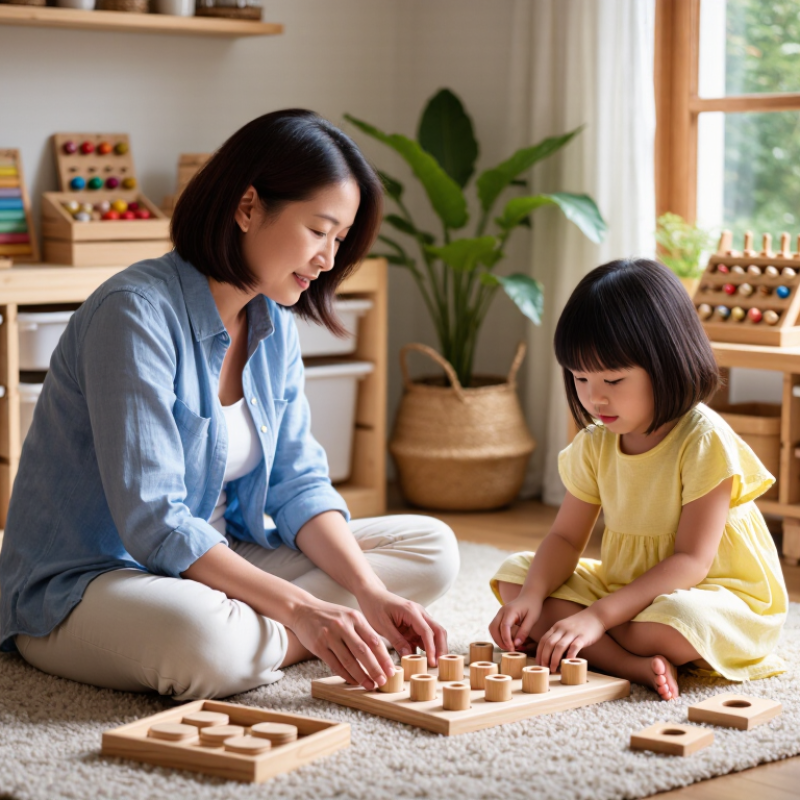
How do montessori toys help language development? This question deserves more than a colorful product list. Montessori materials create purposeful moments for children to touch, observe, name, compare, and describe. A child may place a wooden cylinder into its matching socket, then say “in,” “out,” “big,” or “small.” These simple actions invite conversation without forcing performance. The adult’s response matters greatly. A pause, a clear label, and a follow-up question can turn quiet play into meaningful language practice.

Professional evidence supports this interaction-based approach. The American Academy of Pediatrics clinical report, “The Power of Play,” links play with language, social communication, and healthy development. Pediatrician Dr. Alan Mendelsohn states, “The best toys are those that support parents and children playing, pretending, and interacting together.” The National Early Literacy Panel’s research synthesis also identifies oral language abilities as important foundations for later reading success. UNICEF and WHO’s Nurturing Care Framework further emphasizes responsive caregiver interaction during early childhood.

Still, Montessori toys are not a language-development shortcut. Evidence on branded Montessori products remains limited and uneven. The strongest benefit likely comes from the child, the material, and the adult’s steady participation. A carefully chosen puzzle may encourage naming, but a distracted adult can reduce that opportunity. This article examines practical examples, research findings, and realistic limits. It also asks a necessary question: are we buying better materials, or creating better conversations?
How Do Montessori Toys Help Language Development?

What Montessori Toys Are and How They Support Language Learning

Montessori toys are usually simple, purposeful, and designed for active discovery. They may include stacking pieces, sorting objects, sound cylinders, practical-life tools, or textured letters. Many have one clear challenge and allow children to notice mistakes themselves. The materials are often made from wood, fabric, or other safe, familiar substances. Their value is not decoration. It is the focused action they invite.

A child who places a small cup beside a large cup can hear words such as “small,” “large,” and “beside.” An adult might add, “The blue cup is behind the bowl.” This gentle language expansion connects words with visible actions. Picture cards can support naming, matching, and short descriptions. Textured letters add sound awareness when children trace a letter while hearing its sound. Real objects often work best. A child may carry a spoon, pour water, and say, “More water, please.”

In classroom observations, children often speak more when adults wait instead of correcting every sentence. Open questions help: “What happened?” or “Where should it go?” Montessori toys do not teach language alone. Warm conversation, listening, and repeated reading remain essential. The approach is not perfect. I have sometimes offered too many materials, and children became quiet or distracted. Fewer choices can create better talk. Caregivers should also follow the child’s interests, because a carefully chosen toy may fail when the child is tired, hungry, or simply ready for something else.

How Hands-On Play Builds Early Vocabulary

Hands-on play gives children a reason to use words, not merely repeat them. A child fitting a cylinder into a wooden slot may hear “in,” “out,” “big,” and “small.” The object stays in view, so meaning becomes easier to grasp. When an adult names the action slowly, the child connects sound with movement. “Turn it.” “Try again.” “It fits.” These short phrases support early vocabulary and simple sentence patterns. The child can touch, move, compare, and ask.

Practical, open-ended materials also invite useful verbs. Pouring encourages “fill,” “empty,” “spill,” and “more.” Sorting buttons or shells can prompt “same,” “different,” “red,” and “three.” Caregivers can pause before giving an answer, allowing a child to point, gesture, or attempt a word. Then expand gently: “Car” becomes “The car is under the chair.” This responsive talk follows the child’s attention, which language specialists consider important for meaningful interaction. Avoid quizzing every minute. Play should still feel like play.

A careful adult watches for progress over time rather than expecting instant speech. Some children speak while working; others listen first and respond later. I have to admit that hands-on toys are not a complete language program. If an activity becomes repetitive, I would change the words, add a story, or invite another child to cooperate. Real vocabulary grows through warm conversation, repetition, and shared attention—not through perfect materials alone. “More, please” can begin with one meaningful attempt.

How Do Montessori Toys Help Language Development? - How Hands-On Play Builds Early Vocabulary

Evidence-informed examples of how purposeful, hands-on play can support early communication

Hands-On Play Feature Language Pathway Vocabulary Commonly Practiced Useful Adult Prompts Typical Observable Indicator Typical Age Focus
Object matching and sorting
Grouping objects by color, shape, size, or function
Repeated classification gives children meaningful opportunities to hear and use nouns, descriptive words, and category labels. red, blue, round, big, small, animal, food, same, different “Which ones belong together?”
“How are these two different?”
The child labels an object, follows a simple category direction, or explains a basic match. 18–36 months
Practical-life activities
Pouring, transferring, washing, dressing, or preparing a snack
Real actions create natural contexts for action verbs, sequence words, object names, and polite social language. pour, scoop, wash, open, close, first, next, more, finished “What do we do first?”
“What do you need next?”
The child uses a verb or short phrase to describe an action or request assistance. 18–48 months
Object permanence and posting activities
Putting objects into containers, opening lids, and finding hidden items
Joint attention and repeated routines help children connect words with locations, possession, and simple problem-solving. in, out, under, inside, gone, more, find, where, mine “Where did it go?”
“Is it inside or outside?”
The child points, looks, gestures, or uses words to locate an object or request another turn. 9–24 months
Knobbed puzzles and inset puzzles
Handling pieces and identifying where they fit
The activity supports object naming, spatial concepts, requesting, and early descriptive language. piece, fit, turn, up, down, animal names, shape names, empty, complete “Which piece is missing?”
“Try turning it. Where could it fit?”
The child names a piece, follows a positional cue, or communicates that help is needed. 18–36 months
Three-dimensional object exploration
Examining familiar objects through touch, sight, and movement
Concrete experiences make new words easier to connect with visible properties, functions, and sensory information. smooth, rough, hard, soft, heavy, light, cold, warm, wooden, metal “How does it feel?”
“What can we do with it?”
The child uses a describing word, imitates a label, or compares two objects. 12–48 months
Building and sequencing materials
Stacking, arranging, and reproducing simple patterns
Planning and describing a construction sequence encourages position words, concepts of quantity, and early narrative language. on, beside, tall, short, more, less, build, fall, before, after “Tell me what you are building.”
“What happened after it fell?”
The child combines words to explain a plan, result, or simple sequence. 24–60 months
Miniature objects and pretend play
Using figures, household objects, or animal models in simple scenarios
Pretend play provides practice with symbolic language, social exchanges, role words, and short stories. cook, sleep, help, baby, doctor, hungry, happy, home, go, stop “What is the character doing?”
“What happens next?”
The child assigns roles, uses dialogue, or tells a short event sequence. 24–60 months
Choice-based, uninterrupted play
Selecting an activity and returning to it with limited interruption
Child-led engagement increases opportunities for sustained joint attention, turn-taking, requests, and meaningful conversation. choose, want, need, again, help, wait, my turn, your turn, finished “What would you like to do?”
“Would you like help or another try?”
The child initiates communication, maintains a shared activity, or responds to a conversational turn. 12–60 months
Interpretation note: Hands-on toys do not automatically improve language. The strongest language opportunities usually occur when an adult or peer follows the child’s interest, names objects and actions, expands the child’s words, asks open-ended questions, and allows time for a response. Age ranges are approximate because language development varies among children.
Reference basis: Developmental patterns are consistent with widely used early-language guidance from the Centers for Disease Control and Prevention developmental milestones and responsive, play-based early-childhood education principles.

How Montessori Toys Strengthen Listening and Speaking Skills

How Do Montessori Toys Help Language Development?

How Montessori Toys Strengthen Listening and Speaking Skills

Montessori toys can make language practice feel natural and purposeful. A child sorting wooden animals may hear, “Find the small sheep,” then respond through action. This simple exchange builds listening accuracy without turning play into a test. It also introduces useful words, such as rough, smooth, heavy, empty, and beside.

Caregivers can strengthen speaking skills by pausing before giving help. If a child reaches for a puzzle piece, ask, “Which shape do you need?” Wait quietly. The child might point, gesture, or say, “The circle.” Each response deserves attention, even when pronunciation is unclear. Language-rich play works best when adults model short, correct sentences and follow the child’s interest. Speech-language professionals often recommend this responsive approach because it encourages turn-taking and meaningful communication.

Real observation matters more than a toy’s label. During a pouring activity, I might notice a child listening carefully but using very few words. That could show understanding, not failure. Still, I may have expected too much too quickly. Some children need repeated demonstrations, slower speech, or familiar objects before speaking confidently. Toys cannot replace conversation, shared reading, or professional support when concerns persist. A quiet child may simply need time. Or more connection.

Which Language Skills Different Montessori Toys Encourage

How Do Montessori Toys Help Language Development?

Montessori toys can turn quiet play into meaningful language practice. A wooden object-sorting tray encourages children to hear and use words like “round,” “large,” and “under.” Picture cards support naming, describing, and early sentence building. Practical-life toys, such as pouring tools, invite action words: “fill,” “spill,” “empty,” and “again.” Dolls and animal figures create simple conversations, emotional vocabulary, and pretend-play stories.

The American Academy of Pediatrics recommends shared reading from infancy because responsive adult interaction supports language growth. The CDC’s 2022 developmental milestones also expect many two-year-olds to combine at least two words. These references do not prove that Montessori toys alone cause stronger speech. The adult’s response matters more than the toy’s label. I have found that children often repeat one useful phrase many times. That repetition can sound unproductive, but it is real practice.

Tips: Choose one toy with a clear purpose. Name each action slowly, then pause. Ask open questions, such as “What happened?” Follow the child’s interest instead of correcting every word. Use short phrases first. “Pour the water.” Then expand naturally: “You poured the water into the cup.” The National Association for the Education of Young Children emphasizes play-based conversation and intentional adult support. Still, every child develops differently. A child who speaks less may need observation, not pressure. Consult a qualified speech-language professional when concerns persist.

How Adults Can Extend Language Learning Through Montessori Play

Montessori toys can invite language, but adults make the richest learning visible. During play, name what the child touches: “rough shell,” “small cup,” or “the red bead rolls.” Then pause. This gives the child time to answer, imitate, or invent. The Education Endowment Foundation’s Teaching and Learning Toolkit reports that oral-language approaches can support about six additional months of progress, on average. That figure is not a promise for every child. Home language, attention, hearing, and adult interaction all matter.

Use Montessori play as a conversation, not a test. When a child pours rice between two bowls, describe the action and add one new idea: “You filled the deep bowl. Is it heavier now?” Follow the child’s interest instead of correcting every sentence. Shared attention often works better than repeated questioning. I have also seen adults talk too much. Silence can feel awkward, yet it lets children lead.

Tips

Keep three or four objects on a tray. Name each object slowly. Offer choices, such as “spoon or cup?” Expand the child’s words: “Dog” can become “The brown dog is sleeping.” Read the same short book repeatedly, and connect its pictures to real objects nearby. The American Academy of Pediatrics recommends shared reading from infancy, while the National Early Literacy Panel identifies oral language and vocabulary as important foundations for later reading. Observe what works, adjust gently, and accept imperfect conversations.

FAQS

What are Montessori toys?

Montessori toys are simple materials built around active discovery. They may include stacking pieces, sorting objects, sound cylinders, or textured letters. Each toy usually presents one clear challenge. Children can often notice mistakes independently.

How can these toys support language development?

Toys connect words with visible actions. A child placing a small cup beside a large cup hears “small,” “large,” and “beside.” Real actions make vocabulary easier to understand.

How can adults add language during play?

Describe what the child touches or does. Say, “The red bead rolls.” Then pause. Silence helps children answer, imitate, or create their own words.

What questions work well during Montessori play?

Use open questions such as, “What happened?” or “Where should it go?” Offer simple choices too, like “Spoon or cup?” Avoid turning every moment into a test.

How can pouring activities build vocabulary?

While a child pours rice between bowls, describe the action. You might say, “You filled the deep bowl.” Then ask, “Is it heavier now?” Words become linked to movement and physical changes.

How many materials should be available?

Three or four objects on a tray may be enough. Too many choices can make children quiet or distracted. I have offered too much before. Fewer materials often create better conversation.

Can textured letters help children learn language?

Textured letters support sound awareness. A child traces a letter while hearing its sound. Keep the activity brief and relaxed. It may not suit a tired child.

Do Montessori toys teach language by themselves?

No. Warm conversation, listening, and repeated reading remain essential. Follow the child’s interest. A carefully chosen toy can fail when the child is hungry, tired, or uninterested.

Does shared reading support language learning?

Yes. Read the same short book repeatedly and connect pictures with nearby objects. A picture of a spoon can lead to a real spoon. Repetition is useful, though conversations may still feel imperfect.

How reliable are reported language-learning benefits?

Oral-language activities may support several months of additional progress on average. This is not a promise for every child. Hearing, attention, home language, and adult interaction can change the results.

Conclusion

Montessori toys are thoughtfully designed, hands-on materials that invite children to explore, classify, match, build, and solve problems at their own pace. Through this active play, children encounter meaningful words connected to objects, actions, colors, shapes, sizes, and relationships. Instead of simply memorizing vocabulary, they learn language in context by touching, observing, comparing, and describing what they discover. This helps answer the question, how do montessori toys help language development? They create natural opportunities for children to connect experiences with words.

Different materials can encourage different language skills. Puzzles and sorting activities support listening, following directions, and learning descriptive vocabulary, while pretend-play objects promote conversation, storytelling, and expressive speech. Matching and sequencing games also help children practice concepts such as order, position, and cause and effect. Adults can extend this learning by naming objects clearly, asking open-ended questions, pausing for responses, and encouraging children to explain their choices. Gentle conversation during independent play can strengthen comprehension, confidence, and communication without taking control of the child’s exploration.

Sienna

Sienna

Sienna is a skilled marketing professional with a deep expertise in our company’s core products and services. With a passion for innovation and detail, she plays a pivotal role in crafting insightful blog posts that not only highlight the unique features of our offerings but also provide valuable......