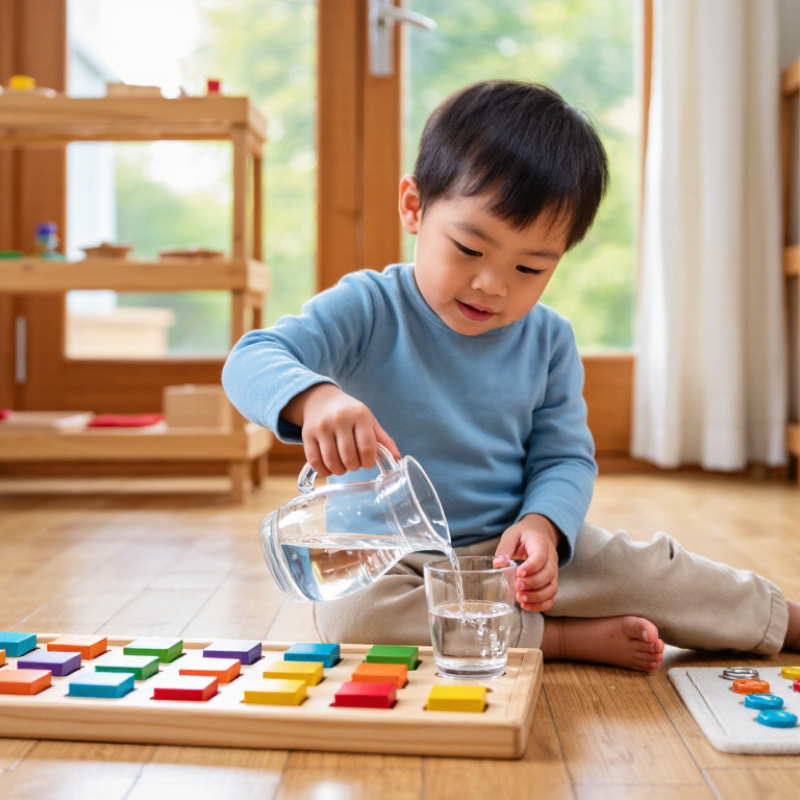
In 2026, families continue to look for toys that encourage learning without overwhelming children with lights, sounds, or constant instructions. Montessori-inspired materials often focus on one clear task, such as matching wooden shapes, pouring water, or fastening a small buckle. These simple activities can invite children to explore at their own pace. But what does that look like in everyday life? A child may repeat the same pouring task several times, spill a little, and adjust their grip without an adult stepping in immediately.
The question “how do montessori toys support child development” has no single answer for every child. Well-chosen materials can offer practice with coordination, concentration, problem-solving, language, and independence. A puzzle with a few large pieces, for example, gives a young child a chance to turn, compare, and try again. These toys do not guarantee particular milestones, and they cannot replace warm interaction, outdoor play, or rest. That distinction matters. A beautiful toy is not automatically a useful one.
This guide explores the developmental skills Montessori toys may support, how to choose age-appropriate materials, and what caregivers can notice during play. Look for sturdy, manageable objects and tasks that suit the child’s current abilities, while leaving room for challenge. Watch what holds their attention. If frustration grows, a smaller step or a calm demonstration may help. Even then, adults will not always read the moment perfectly. That is worth reflecting on: children benefit from thoughtful support, not a rigid rulebook.
What Defines Montessori Toys: Child Choice, Hands-On Use, and Self-Correction
Montessori toys are defined less by their materials than by how children use them. A child chooses a task, handles its pieces, and notices whether the result works. A simple wooden shape sorter, for example, lets a child turn a block until it fits. No adult needs to announce every mistake. The object offers feedback. Still, a wooden toy is not automatically Montessori; its purpose and the child’s freedom to explore matter more.
The World Health Organization’s 2019 movement guidelines recommend at least 180 minutes of varied physical activity daily for children aged one to two. For ages three to four, at least 60 minutes should be moderate to vigorous, within that same 180-minute total. These figures describe movement, not toy effectiveness. But they underline why reaching, stacking, carrying, and sorting can complement a child’s active day. Small actions count.
Choice also needs thoughtful limits. Too many toys can distract; too few may frustrate a child who is ready for a harder challenge. OECD’s Starting Strong VI report (2021) highlights the importance of meaningful interactions in early childhood settings. Adults can observe first, then offer a brief prompt rather than taking over. A child may repeat the same puzzle for days. That can look unproductive, yet repetition often gives them room to test an idea, adjust their grip, and try again.
Early Brain Growth: UNICEF Says 90% Develops Before Age Five
How Do Montessori Toys Support Child Development in 2026?
UNICEF highlights that about 90% of brain development happens before age five. This describes rapid early growth, not a deadline for learning or a guarantee of outcomes. During these years, play can nurture attention, language, movement, and problem-solving. Montessori-style materials offer simple, hands-on choices. Pouring large beads between cups, for example, gives a child practice with coordination and concentration. A knobbed puzzle invites careful matching. The toy alone does not teach everything; a responsive adult and a child’s own exploration matter too.
Repeated play is useful, not pointless. A child may notice a new detail in the same activity each day. Adults can pause before helping, though waiting too long may frustrate a tired child. Not every child enjoys the same task, and that is worth noticing. Keep materials age-appropriate, supervise play, and follow the child’s interests.
Tips: Offer two or three activities on a low shelf, such as stacking blocks or a simple sorting tray. Show one action slowly, then let the child try. Use everyday words to describe what you see: “The cup is full.” If interest fades, put the activity away and try again another day.
Cognitive Skills: How Open-Ended Play Supports Focus and Problem-Solving
Open-ended materials invite children to test ideas rather than follow one fixed sequence.
A set of wooden blocks, for example, can become a bridge, a tower, or a narrow road for toy animals. As a child balances each piece, they notice weight, shape, and what happens when one block shifts. They may pause, rebuild, and try a different arrangement. Try again. No answer appears on a screen. That small delay can give attention room to grow, while repeated attempts let children practice planning and flexible problem-solving.
In everyday play, watch what happens after a structure falls. Does the child widen its base, choose a shorter block, or ask for help? These actions offer useful clues beyond a finished project. An adult can describe what they see, then wait instead of correcting every move. That matters. Still, open-ended play does not automatically create focus; tiredness, age, and interest all shape the experience. Some children need a simple invitation or fewer pieces to begin. Adults can also overestimate a toy’s value. A plain object is not a developmental tool by itself. The child’s engagement and a calm, safe space matter too.
Motor Skills and Independence: From Grasping to Practical-Life Tasks
How Do Montessori Toys Support Child Development in 2026?
Motor Skills and Independence: From Grasping to Practical-Life Tasks
Montessori-inspired toys can give children meaningful chances to practise small movements. A wooden knob puzzle, for example, invites a child to pinch, turn, and place pieces with care. Posting blocks through a slot builds hand-eye coordination and encourages repeated attempts. These activities may support motor development, but no toy guarantees a particular outcome. Choose objects that suit the child’s age and current abilities, and stay nearby when small parts are involved.
Tips: Offer one or two activities at a time. Let the child try before stepping in. For practical-life practice, provide a small jug, a shallow tray, and a cloth for wiping spills. Keep materials light and easy to manage.
Everyday tasks can make independence visible: carrying a napkin, opening a simple container, or watering a sturdy plant. These jobs involve gripping, balance, and planning, while giving children a real purpose. Progress is rarely tidy; water spills, and lids resist. Adults may overestimate how much help a child needs—or expect too much too soon. Pause, observe, and adjust the task rather than rushing to finish it. A safe, manageable challenge often teaches more than a perfect result.
Research Evidence: A 2023 Review Examined 32 Montessori Studies
How Do Montessori Toys Support Child Development in 2026?
A 2023 review examined 32 Montessori studies, offering a useful—but not final—picture of the evidence. The review reported promising links between Montessori education and children’s academic, social, and executive-function outcomes. However, these studies often assessed whole learning environments, not individual toys. A wooden puzzle alone cannot claim the same benefits as a thoughtfully prepared classroom. That distinction matters.
In practice, open-ended materials can invite children to sort, pour, build, and repeat tasks at their own pace. A child may carefully transfer beans between small bowls, correcting spills without adult direction. Such moments can exercise concentration and coordination. Still, results depend on the child, the activity, and adult support. Research methods also vary, so broad claims deserve a second look. Montessori-inspired play is not a guaranteed shortcut.
Tips: Offer one clear activity at a time, such as nesting cups or a simple lacing board. Keep materials within reach, then pause before stepping in. Notice what holds the child’s attention. If frustration rises, simplify the task; independence should feel possible, not like a test.
How Do Montessori Toys Support Child Development in 2026? — Research Evidence: A 2023 Review Examined 32 Montessori Studies
| Developmental area |
How Montessori materials may support it |
What the research suggests |
Evidence interpretation |
| Academic learning |
Hands-on materials let children practice concepts such as counting, sorting, letter sounds, and measurement through purposeful activity. |
The 2023 review of 32 studies reported generally favorable academic outcomes in Montessori settings, although results varied across studies and measures. |
Positive pattern; context matters |
| Executive function |
Choosing a task, following its steps, correcting mistakes, and returning materials can give children practice in planning and self-regulation. |
Some studies report advantages in executive-function-related skills for children in Montessori programs. Findings concern the broader educational approach, not a proven effect of any single toy. |
Promising, not toy-specific |
| Independence and persistence |
Accessible materials and activities with a clear purpose can encourage children to begin work, repeat it, and seek solutions with less adult direction. |
Independent work and sustained engagement are central features of Montessori classrooms, but research findings can be influenced by classroom practice and implementation quality. |
Plausible support; varies by setting |
| Fine-motor and sensory exploration |
Manipulating objects, matching, pouring, threading, and tracing can exercise hand control and provide opportunities to explore texture, shape, and size. |
These activities offer direct practice of motor and sensory tasks; the 32-study review does not establish that Montessori materials uniquely improve these skills over all alternatives. |
Practice opportunity; comparative evidence limited |
| Social and emotional development |
Shared classroom routines and opportunities to work independently or alongside peers can support turn-taking, cooperation, and responsibility. |
Research on social and behavioral outcomes is mixed across studies. Outcomes depend on factors such as age, classroom climate, and how the program is delivered. |
Mixed findings |
| Creativity and problem-solving |
Open-ended use of materials can invite children to test ideas, notice errors, and try different approaches. |
Some research examines creativity and problem-solving, but these outcomes are measured in different ways and should not be treated as guaranteed effects of Montessori toys. |
Suggestive; measures differ |
Evidence note: The 32 studies examined Montessori education more broadly, not a standardized set of toys. Studies differ in design, population, comparison groups, and program implementation; therefore, the findings describe patterns rather than proving that a particular material causes a developmental outcome. “2026” in the title does not mean the evidence summarized here includes research published after the 2023 review.
Conclusion
How do montessori toys support child development? They give children meaningful choices, invite hands-on exploration, and often offer simple ways to notice and correct mistakes. This lets a child learn at their own pace rather than relying on constant adult direction. The approach is especially relevant in early childhood: UNICEF notes that around 90% of brain development happens before age five, making everyday opportunities to explore and practice important.
Open-ended play can encourage children to concentrate, experiment, and work through problems in different ways. Activities such as sorting, building, pouring, and fastening also help develop coordination and fine motor control. When children practice practical-life tasks, they can build confidence and independence alongside physical skills. A 2023 review examining 32 Montessori studies adds research context to these potential benefits, while also reminding readers that outcomes can vary. Overall, thoughtfully chosen toys can support learning by giving children time, space, and opportunities to actively engage with the world around them.

 Deri Toys
