How Can Montessori Toys Reduce Screen Time for Kids?

Time:2026-09-06 Author:Aria
0%

Children are spending more time with digital entertainment, often before they can explain why. The Common Sense Census: Media Use by Kids Zero to Eight (2020) reported an average of 2 hours and 24 minutes of daily screen media. Among older children, Common Sense Media’s 2021 report found that tweens averaged 5 hours and 33 minutes of entertainment screen use daily, excluding schoolwork. These figures make one question especially practical: how can montessori toys reduce screen time?

Montessori toys offer hands-on alternatives that invite touching, sorting, building, pouring, and careful repetition. A child may transfer wooden beads with a small spoon, match textured shapes, or construct a tower beside the kitchen table. These activities can replace passive viewing with purposeful movement and concentration. The American Academy of Pediatrics recommends creating consistent media limits and protecting sleep, meals, and family interaction. Open-ended toys can support those routines when adults introduce them calmly and model their use.

Still, Montessori toys are not a guaranteed solution. Direct research linking Montessori toys alone with lower screen use remains limited. That matters. Their value depends on age, safety, accessibility, and adult involvement. A carefully chosen activity may hold attention for ten minutes, not an entire afternoon. Parents can begin with one screen-free period, observe the child’s response, and adjust the challenge. This article examines practical strategies, developmental principles, and industry evidence to explain how Montessori materials may make screen reduction more realistic, gentle, and sustainable.
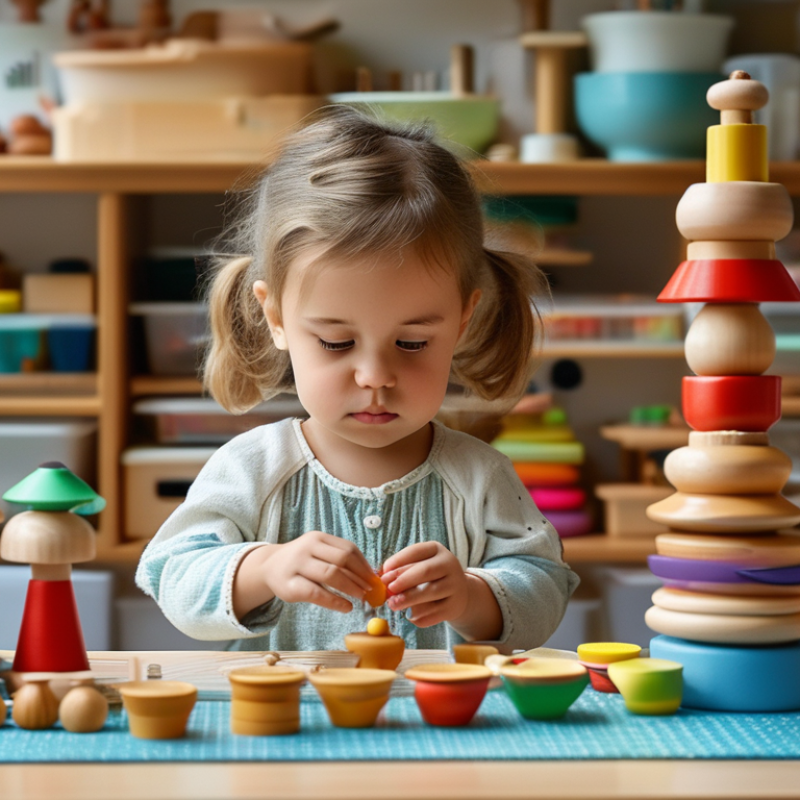
How Can Montessori Toys Reduce Screen Time for Kids?

What Montessori Toys Are and How They Support Independent Play

Montessori toys are simple, purposeful materials that invite children to act, choose, and repeat. They may include stacking blocks, shape sorters, fabric fasteners, or small pouring tools. These toys usually have one clear challenge, not flashing lights or endless sounds. The child controls the pace.

That structure can support independent play. A child might carry three wooden cups, fill one with large pom-poms, then try again after spilling them. The mistake becomes useful feedback. Caregivers can place only a few safe materials on a low shelf, then wait before helping. This quiet pause matters. It gives children room to think, adjust, and persist.

The Common Sense Census: Media Use by Kids Zero to Eight reported an average of 2 hours and 24 minutes of daily screen media use in 2019.

The World Health Organization recommends no sedentary screen time for infants and toddlers under two, and no more than one hour for children aged two to four. Montessori toys cannot remove every screen from family life. That expectation is unrealistic. However, a reachable basket, a clear floor space, and ten unhurried minutes can make offline play easier to begin. Adults should also observe rather than constantly direct. Some children need more invitation, movement, or shared play before independence develops.

Why Screen Time Can Affect Children’s Attention and Daily Habits

How Can Montessori Toys Reduce Screen Time for Kids?

Why Screen Time Can Affect Children’s Attention and Daily Habits

A bright screen changes quickly, so children receive constant visual and sound stimulation. This can make slower activities feel boring. Child development research links excessive screen use with sleep disruption, reduced movement, and weaker attention routines. The effect is not identical for every child. Context matters.

A wooden puzzle, sorting tray, or stacking set offers one clear task. A child touches each piece, tests a position, and notices small progress. There is no sudden animation to interrupt concentration. In everyday observation, children often stay longer when the activity matches their current ability. Too much difficulty creates frustration, though.

Montessori-inspired toys can also reshape daily habits. A basket on a low shelf invites children to choose, play, and return materials independently. Repeating this routine may make screen requests less automatic. A timer can support a gentle transition, while a predictable bedtime keeps screens away from tired evenings. Small changes help.

This approach is not magic. Some children still prefer videos, especially after a stressful day. Adults may need to play nearby first. I have found that quiet modeling works better than repeated commands. Reading, cooking, and outdoor movement should remain part of the routine. Toys are tools, not substitutes for attention, conversation, or emotional support.

How Montessori Toys Encourage Focus, Creativity, and Hands-On Learning

When a child reaches for a screen, Montessori toys offer a slower, purposeful alternative. A sorting tray, pouring set, or stacking puzzle gives small hands a clear job. Children often concentrate longer when the challenge matches their current ability. Small hands work. The adult’s role is to prepare a safe space, then avoid taking over. This supports independence and makes learning feel personal.

Montessori toys encourage creativity because one object can support several ideas. A set of wooden shapes may become a bridge, a house, or a pattern. A cloth, basket, and large figures can inspire simple storytelling. There is no single correct result. That matters. Hands-on play also strengthens coordination, spatial awareness, and early problem-solving skills. Child-development professionals commonly recommend open-ended activities because they invite active thinking instead of passive watching. Choose pieces suitable for the child’s age, especially when smaller parts could create a choking risk.

Replacing screen time works better than simply removing it. A parent might place a puzzle beside the usual viewing area and suggest fifteen quiet minutes. Keep the phone away, too. Children notice adult habits. Some children will reject the activity at first, and that is normal. The toy may be too difficult, too easy, or introduced at the wrong moment. I have found that adjusting the setup often helps more than giving repeated instructions. Montessori play is not a magic switch. It requires patience, observation, and occasional reconsideration.

How Can Montessori Toys Reduce Screen Time for Kids? - How Montessori Toys Encourage Focus, Creativity, and Hands-On Learning

Evidence-Based Dimension Relevant Data or Finding How Montessori-Style Toys Help Practical Home Measure
Recommended screen-time limits For children aged 2–5 years, major pediatric and public-health guidance recommends no more than about 1 hour of sedentary screen time per day, preferably with an adult present. A prepared shelf with accessible puzzles, blocks, sorting materials, books, and practical-life activities gives children a visible alternative when they ask for a screen. Record daily recreational screen minutes and compare them with the time spent in independent hands-on play.
Early-childhood screen exposure Guidance advises avoiding routine screen media for infants and toddlers younger than 18–24 months, except for activities such as video communication. Simple real-world materials support sensory exploration, movement, object permanence, and cause-and-effect learning without requiring digital stimulation. Create a screen-free play period during meals, before bedtime, and during at least one daytime routine.
Number of available toys A laboratory study of 36 toddlers aged approximately 18–30 months found that access to 4 toys, compared with 16 toys, was associated with longer and more varied play episodes. A limited toy rotation reduces visual clutter and encourages children to explore one material more deeply instead of switching rapidly between options. Display 4–8 purposeful activities at one time and rotate them when interest declines.
Sustained attention Hands-on play requires children to select a task, repeat actions, notice errors, and complete a sequence. These behaviors are linked to self-regulation and executive-function practice. Single-purpose puzzles, matching work, threading, and graded difficulty provide a clear beginning, process, and completion point. Use a timer only for observation: track the longest uninterrupted play period without demanding a specific duration.
Creativity and flexible thinking Open-ended play allows multiple solutions and supports symbolic thinking, language development, and problem solving. The specific outcome depends on the child’s age, experience, and adult interaction. Blocks, loose parts, drawing tools, and fabric materials can be used in many ways rather than producing one predetermined digital response. Count the number of different uses or solutions a child creates from the same material during one play session.
Fine-motor and practical-life learning Tasks such as pouring, transferring, fastening, threading, and stacking involve repeated hand movements and visual-motor coordination. These are developmental learning opportunities, not guaranteed clinical outcomes. Realistic, child-sized tools and manipulatives make practice purposeful and provide a satisfying alternative to passive viewing. Offer one age-appropriate practical task daily and note whether the child completes it with fewer prompts over time.
Adult involvement Children generally benefit from adults who observe, model safe use, ask open questions, and allow time for independent problem solving. Screen-time guidance also emphasizes co-viewing and family routines. Adults can introduce a material briefly, then step back so the child—not the toy or screen—controls the pace and direction of the activity. Aim for a short daily period of uninterrupted adult observation without taking over the activity.
Transition away from screens Consistent routines, advance warnings, and predictable alternatives make transitions easier than removing a screen without a replacement activity. Place a prepared hands-on activity next to the child’s usual transition point, such as after breakfast or before the evening routine. Use a 5-minute warning, end the screen at the planned time, and offer two specific activity choices.
Interpretation: Montessori-style toys do not automatically reduce screen time. They are most effective when they are developmentally appropriate, easy to reach, limited in number, and supported by consistent family routines. The available research supports purposeful hands-on play and reduced toy clutter, but it does not establish that Montessori toys alone cause a specific reduction in screen minutes.
Reference basis: World Health Organization, Guidelines on Physical Activity, Sedentary Behaviour and Sleep for Children Under 5 Years of Age (2019); American Academy of Pediatrics, Media and Young Minds (2016); Dauch, C., Imwalle, M., Ocasio, B., & E. E. (2018), “The influence of the number of toys in the environment on toddlers’ play,” Infant Behavior and Development, 50, 78–87.

Ways to Use Montessori Toys in a Balanced Screen-Time Routine

A balanced screen-time routine works better when children have an inviting alternative, not a sudden ban.

The 2020 Common Sense Census reported that children aged eight and under averaged 2 hours and 24 minutes of screen media daily. Montessori-inspired materials can fill small gaps with purposeful, hands-on play. A wooden sorting tray, threading cards, or a simple pouring activity gives children a clear task and visible progress. These details matter. Children often return to activities they can control.

Use screens at predictable times, such as after outdoor play or before a family video call. Then place two or three open-ended toys on a low shelf. Keep instructions brief. Let the child choose. For younger children, the World Health Organization recommends no more than one hour of sedentary screen time daily for ages two to four. The American Academy of Pediatrics also encourages consistent limits and screen-free routines. These recommendations guide families, but they are not rigid measurements for every household. A tired caregiver may need flexibility.

Tips: Start with a ten-minute toy invitation after screen use. Use a timer only when it reduces conflict. Rotate materials weekly, and observe what holds attention. Avoid turning every activity into a lesson. Pouring rice can be calming, but it can also create a mess. Prepare a mat, and accept some imperfect play. Keep meals, bedrooms, and the final hour before sleep screen-free when possible.

How Parents Can Choose and Introduce Montessori Toys Effectively

Montessori toys can reduce screen time when parents choose them with purpose, not simply because they look natural or attractive. In my experience, children stay engaged longer with toys that match their abilities and interests. Choose open-ended materials with one clear challenge, such as sorting objects, building simple structures, or transferring water with a small cup. Consider your child’s age, coordination, attention span, and safety needs. Avoid tiny parts for young children, and inspect materials regularly for damage. Simplicity matters.

Watch first. Notice what your child repeats, avoids, or solves independently. Then offer one or two suitable toys in a quiet, reachable place. Keep it simple. Demonstrate slowly, using few words, and let your child try without constant correction. A short demonstration often works better than an excited explanation. If the toy creates frustration, adjust the task or put it away temporarily. Not every child enjoys every activity.

Create a predictable screen routine around real play. For example, place the toy basket near the usual viewing area and offer it before recreational screen use. Rotate materials every few days, but do not remove favorites too quickly. Familiar activities can build confidence. I once introduced too many choices at once, and my child ignored all of them. That was my mistake. Parents should also accept imperfect play. A child may use a practical-life toy differently than expected, and that exploration can still support concentration, coordination, and independence.

FAQS

: How do Montessori toys support concentration?

: They give children one clear task, such as sorting, pouring, or stacking. Small hands stay busy. A suitable challenge can encourage longer focus.

Can these toys replace screen time?

They can offer a slower alternative, but they are not a magic switch. Place a puzzle near the usual viewing area. Offer fifteen quiet minutes before recreational screen use.

What makes a toy open-ended?

An open-ended toy allows several possible results. Wooden shapes might become a bridge, house, or repeating pattern. There is no single correct answer.

How should parents introduce a new activity?

Watch the child first. Notice what the child repeats, avoids, or solves independently. Demonstrate slowly, using only a few words. Then step back.

What should parents do when a child becomes frustrated?

Check whether the activity is too difficult, too easy, or poorly timed. Reduce the number of pieces or simplify the task. Putting it away temporarily can also help.

How many toys should be offered at once?

One or two choices are often enough. Too many options may feel confusing. I once offered several activities, and my child ignored them all. That was my mistake.

Are Montessori toys safe for every age?

Choose materials that match the child’s age and coordination. Avoid small parts for young children because they may cause choking. Inspect toys for cracks, loose pieces, or damage.

Should adults correct the child’s play?

Adults should prepare a safe, reachable space and avoid taking over. A child may use a pouring set or basket differently than expected. That unusual approach may still build coordination and independence. Not every result needs correction.

Conclusion

Montessori toys are simple, purposeful materials that invite children to explore, solve problems, and play independently. Unlike highly stimulating digital entertainment, they encourage hands-on learning through activities such as sorting, building, matching, and practicing everyday skills. This kind of play can help children develop concentration, creativity, coordination, and confidence while giving them meaningful ways to stay engaged. Since excessive screen time may affect attention, sleep routines, and daily habits, parents can consider how can montessori toys reduce screen time by offering appealing alternatives that support active participation.

Montessori toys work best as part of a balanced routine rather than as a complete replacement for technology. Parents can create screen-free periods, place a small selection of age-appropriate toys within easy reach, and introduce activities gradually according to a child’s interests and abilities. Allowing children to choose, repeat, and complete tasks independently can make play more rewarding. With consistent guidance, realistic limits, and opportunities for outdoor movement and family interaction, Montessori-inspired play can help children build healthier habits while learning through curiosity and discovery.

Aria

Aria

Aria is a dedicated marketing professional with a deep passion for innovative strategies and a keen understanding of our company's product offerings. With a wealth of experience in the industry, Aria excels at crafting engaging content that highlights the unique features and benefits of our......