Montessori toys are often described as tools for independence, concentration, and practical learning. But how do montessori toys help children build life skills in everyday play? The answer is usually visible in small actions: a toddler grips a wooden spoon, pours beans between two cups, or tries again after a block tower falls. These moments can support coordination, patience, problem-solving, and confidence. Small steps matter.
When comparing China’s best Montessori toys, look beyond attractive photos and broad promises. Consider whether the materials feel sturdy, the pieces suit the child’s age, and the activity invites hands-on exploration. A simple dressing frame can let a child practice buttons slowly. Sorting trays can help little hands compare shapes and colors. These toys work best when adults allow children time to explore, while staying nearby and offering help when needed. That takes practice.
Still, a beautiful toy cannot guarantee a life skill. Children may ignore it, use it differently, or need repeated demonstrations. It is easy to romanticize independent play and forget how much patience it asks of adults. That is worth remembering. A thoughtful choice should match a child’s current interests and abilities, not an idealized milestone chart. In this guide, we’ll look at how purposeful play may nurture useful habits—and what parents can realistically expect from Montessori toys made in China.
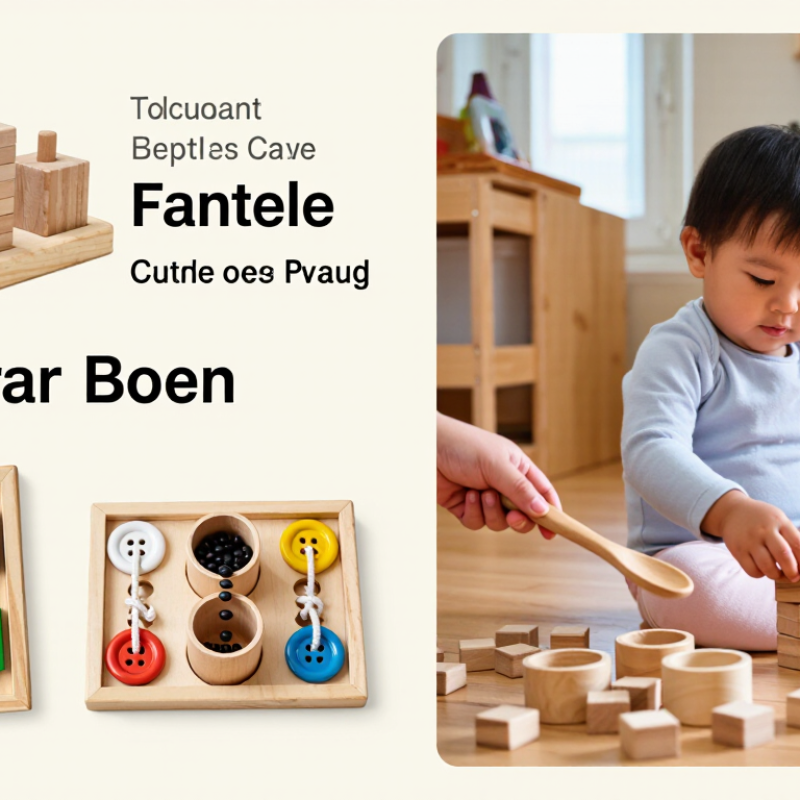
Montessori toys made in China are defined less by their country of origin than by how children can use them. A practical design invites a child to act independently, repeat a task, and notice the result. A small pouring set, for example, might include a light jug, two cups, and a tray that catches spills. The pieces should fit a child’s hands without making the task effortless. A little challenge matters.
Materials and construction shape the experience. Smooth edges, stable wooden parts, clear finishes, and appropriately sized pieces are useful details to inspect. A product description alone cannot confirm quality. Buyers should look for clear material information, age guidance, and consistent checks during production. The same care applies to fabric, paint, and removable parts. It is easy to overlook a rough edge. Hands find it quickly.
Good design also leaves room for concentration. A sorting board with a few distinct shapes may encourage careful matching, while flashing lights or constant sounds can distract from the action. Not every colorful toy is unsuitable, and a plain toy is not automatically thoughtful. I would question designs that promise too many skills at once. Real play can look slow: a child pours, spills, and tries again. That is useful evidence, though it is not a complete measure of a toy’s value.
| Toy Type | Typical Activity | Skills Practiced | Montessori-Inspired Design Features | Common Materials | What to Check When Buying |
|---|---|---|---|---|---|
| Shape sorter | The child matches solid shapes to openings in a box or board. | Visual discrimination, hand–eye coordination, problem-solving, persistence | One clear task at a time; shapes are easy for the child to grasp and replace. | Wood, or molded plastic | Check that pieces are smooth, appropriately sized for the stated age, and free from loose parts or sharp edges. |
| Stacking and nesting blocks | The child arranges pieces by size, balances them, or nests them together. | Fine-motor control, spatial awareness, sequencing, concentration | Simple forms and a manageable number of pieces allow repeated, self-directed exploration. | Wood, or durable plastic | Look for stable construction, smooth finishes, and age guidance that accounts for small-piece risks. |
| Pouring and transfer set | The child transfers dry materials or water between containers using a scoop, spoon, or small pitcher. | Practical-life skills, coordination, focus, independence | Child-sized tools support real, purposeful actions; a tray can help define the work area. | Wood, stainless steel, glass, or food-contact-grade plastic, depending on the item | Confirm the intended use and age range. Supervise activities involving water, glass, or small loose materials. |
| Bead threading set | The child threads large beads onto a lace or cord, following a pattern or making one independently. | Hand strength, bilateral coordination, pattern recognition, patience | Clearly visible pieces and simple options make the activity easy to repeat and adapt. | Wood, textile cord, or plastic | Check bead size, cord condition, and age suitability; small beads and long cords require careful supervision. |
| Practical-life dressing frame | The child practices fastening a zipper, buttons, snaps, or buckles on a fabric panel. | Self-care, finger dexterity, sequencing, confidence | One fastening skill is presented clearly for focused practice before the child applies it to clothing. | Fabric, wood, and metal or plastic fasteners | Inspect stitching and fasteners for secure attachment, smooth edges, and durability under repeated use. |
| Knobbed puzzle | The child removes and replaces pieces using small knobs. | Grip control, visual matching, concentration, early classification | Pieces have defined places and can be handled individually, making the task easy to repeat. | Wood, or sturdy board with wooden pieces | Check that knobs are firmly attached and that the puzzle is suitable for the child’s developmental stage. |
| Color or size matching materials | The child sorts or matches objects according to one visible property, such as color or size. | Observation, classification, vocabulary, logical thinking | Materials isolate a clear concept and use consistent differences that are easy to notice. | Wood, card, or plastic | Check that colors and sizes are distinguishable and that any small pieces are appropriate for the intended age. |
| Child-sized cleaning tools | The child sweeps, wipes, or brushes a small area as part of a practical routine. | Responsibility, coordination, independence, care for the environment | Tools are scaled for small hands and support a real, purposeful household activity. | Wood, natural or synthetic fibers, and metal or plastic components | Look for a comfortable grip, securely fixed bristles, and a size the child can manage safely. |
What “Montessori-inspired” means: A toy may support Montessori principles when it encourages hands-on exploration, purposeful activity, repetition, independence, and a clear learning focus. “Made in China” identifies a place of manufacture; it does not by itself indicate a particular teaching method, material quality, or safety level. Check the product’s age grading, materials, construction, and applicable safety information.
How a child uses it matters more than where it was made. A small jug, two cups, and a spill-catching tray invite independent practice. Check for smooth edges, stable parts, and clear material details. A product description alone proves little.
Dressing frames can help children practise hand control and persistence. Sorting shapes supports comparison and early problem-solving. Pouring, spilling, and wiping offer practice with a simple routine. Progress can look messy.
Use age guidance as a starting point, not a full assessment. Choose one manageable challenge based on what your child can already do. A simple shape sorter may suit a beginner better than a puzzle with many small pieces.
Inspect piece size, loose parts, durability, and edges. Look for information about materials and finishes, including paint or fabric. Supervise young children closely around small objects. Hands find rough edges quickly.
No. Colorful toys can still invite focused, hands-on play, and plain wooden toys are not automatically thoughtful. Notice what the child does, not just how the toy looks. That distinction is easy to miss.
Try offering one or two activities within easy reach. A crowded shelf can make choosing harder. Rotate toys occasionally, but leave familiar favorites available. There is no perfect schedule.
Offer one clear activity, then allow time for repetition and mistakes. Avoid correcting every small error. A spilled cup can become practice in wiping and trying again, if the child wants to help.
No single toy guarantees concentration, coordination, or confidence. Active play can give children chances to practise balance and movement. Social play may involve waiting or asking for help. I may put too much faith in the toy; adult support matters, too.
Montessori toys made in China can bring together thoughtful design, practical materials, and hands-on activities that invite children to explore at their own pace. Their simple forms, clear purposes, and manageable parts can make it easier for children to understand how a toy works and decide what to try next. Rather than relying on lights or sounds to hold attention, many Montessori-inspired toys encourage sorting, stacking, matching, pouring, and other purposeful actions.
Through this kind of play, children can practise concentration, coordination, problem-solving, patience, and confidence in everyday tasks. To choose age-appropriate toys, families can consider a child’s abilities, interests, and need for safe, easy-to-handle pieces, while offering room to grow into new challenges. Adults can support learning by preparing an uncluttered play space, demonstrating an activity briefly, and then allowing children time to explore independently. These simple choices help answer the question: how do montessori toys help children build life skills?

 Deri Toys
