China’s Montessori toy sector is changing quickly, shaped by parents, educators, and experienced manufacturers. Many buyers now ask, “what are the latest trends in montessori educational toys?” The answer goes beyond bright colors and wooden shapes. Current products increasingly support practical life, sensory discovery, fine motor control, and early problem-solving through simple, purposeful activities.
Natural wood remains popular, but design expectations are becoming more demanding. Smooth edges, water-based finishes, clear age guidance, and durable construction matter greatly. Suppliers are also developing modular toys, adjustable learning towers, sound cylinders, sorting trays, and nature-based activity sets. Some products combine traditional Montessori principles with local cultural details, such as Chinese characters, familiar foods, and community scenes. This can make learning feel more meaningful for children.
However, the word “Montessori” is not always used carefully. A wooden toy is not automatically Montessori. Its purpose, difficulty level, independence of use, and adult guidance all deserve closer review. Responsible manufacturers should explain materials, testing procedures, production controls, and recommended ages. Reliable buyers should request samples and inspect every finish, hinge, cord, and small component. Small details matter.
Digital tools are entering the market, although many educators still prefer screen-free experiences. Sustainability is also influencing packaging and material choices, but green claims need evidence. Trends may look impressive online. Real classroom use tells more. This overview examines China’s leading Montessori toy developments with a practical, evidence-aware perspective, while recognizing that some innovations remain untested or uneven in quality.
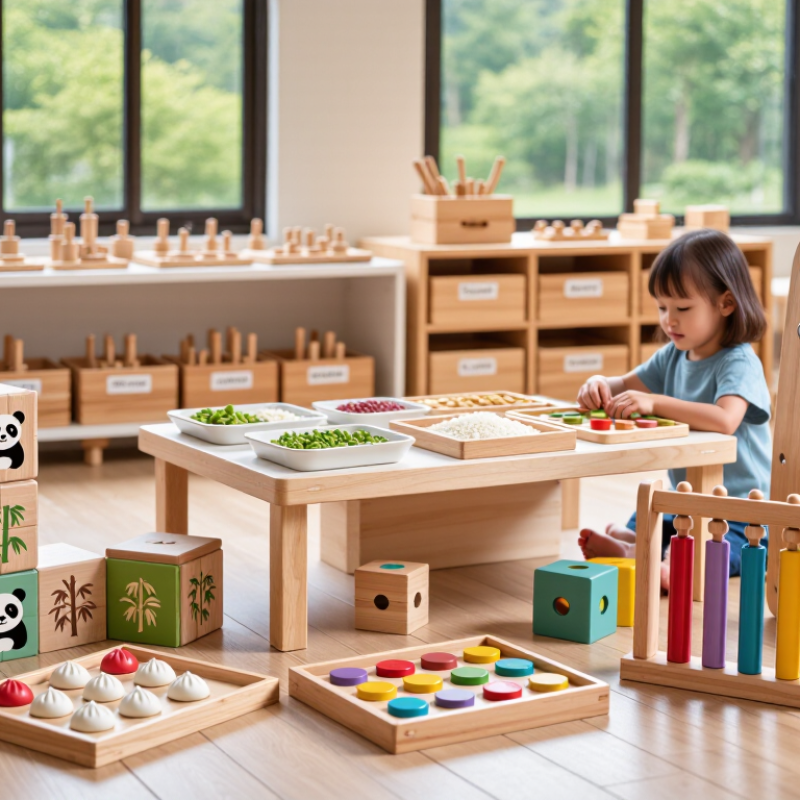
Montessori toys are gaining attention in China because they make learning visible, hands-on, and easier to fit into daily family life. A child can pour beans, match wooden cylinders, or fasten a small button independently. These actions feel practical, not decorative. The China Toy and Juvenile Products Association reported domestic toy retail sales of about 89.7 billion yuan in 2023, showing the scale of this competitive market. Parents increasingly compare educational value, material safety, and durability before buying.
Screen-free play is another strong reason. A 2024 report from Statista Market Insights identifies China as one of the world’s largest toys and games markets, supported by rising household spending and digital commerce. Montessori products suit online demonstrations because their purpose is easy to show: a puzzle develops hand control, while sorting cards support early classification. Teachers and parents also value open-ended play, where one object can support several activities. Simple design matters.
But popularity is not proof. Some sellers use “Montessori” as a loose marketing label, even when toys offer limited independent exploration. That weakness deserves attention. A well-designed product should match a child’s age, include clear instructions, and withstand repeated handling. Research from the American Montessori Society also emphasizes prepared environments and adult guidance, not toys alone. Chinese families may want faster learning results, yet real development can look quiet: a child repeats one task for ten minutes, spills water, then tries again.
China’s Montessori toy market is led by practical life and sensorial categories. Parents often choose dressing frames, pouring sets, sorting trays, and texture boards. These toys turn daily skills into visible practice. A child may button a wooden frame, transfer beans with a spoon, or match rough and smooth surfaces. Practical play leads.
Language and early mathematics also show strong demand. Movable alphabet pieces, sandpaper letters, counting rods, bead chains, and shape puzzles support hands-on learning. Many Chinese families prefer toys that connect play with school readiness. However, responsible sellers should avoid promising faster reading or higher test scores. Development varies between children.
Cultural and nature-based materials are gaining attention, especially geography puzzles, animal classification cards, gardening tools, and simple science kits. Compact designs suit smaller apartments, while washable surfaces and rounded edges matter to caregivers. In my review of classroom use, open-ended materials usually hold attention longer than noisy electronic toys. Still, this observation is limited. Some children prefer digital feedback, and Montessori principles can be oversimplified in online listings. Clear age guidance, durable construction, and accurate safety information build greater trust in this expanding market.
The chart compares a normalized China demand index for major Montessori toy categories from 2023 to 2024. The index uses 2023 demand as the baseline of 100 and reflects category-level momentum rather than sales reported by any individual company or brand.
Practical-life and sensory toys lead the latest trend, while STEM, wooden puzzles, and fine-motor activities continue to show steady growth. The strongest demand is concentrated in screen-free, skill-based products for early childhood learning.
Chinese Montessori toy designers are increasingly building for purposeful, hands-on learning. A wooden sorting tray may include three uneven compartments, allowing children to compare size, shape, and weight. Small knobs support a child’s pincer grip. Smooth edges and water-based finishes help create safer daily play. These details matter more than decorative features.
Current designs often combine natural textures with flexible functions. A stacking set can become a counting tool, a color game, or a pretend market display. Modular pieces encourage children to change the activity independently. Many makers also reduce flashing lights and loud sounds. Quiet play can support concentration, especially in shared classrooms or small homes. Some products use bamboo, beech, or recycled materials, but material claims still require careful verification.
Good design should follow child development principles, not only market trends. Clear size differences can support visual discrimination. Simple latches and threading boards strengthen hand control and patience. Picture cards may encourage vocabulary, but excessive instructions can limit imagination. That is an important weakness in some polished products. They look educational, yet adults must demonstrate every step. Designers should test prototypes with children, parents, and early-years educators. They should also provide accurate age guidance and inspect durability after repeated use. A toy is not successful because it looks beautifully minimal. It succeeds when a child can explore, make mistakes, and try again with growing confidence.
China’s Montessori toy market is moving toward simpler forms, traceable materials, and stronger safety testing. Solid beech, bamboo, and untreated wood remain popular for stacking blocks, sorting trays, and practical-life tools. However, “natural” does not automatically mean safe. Wood can splinter, absorb moisture, or carry unsafe coatings. I have seen beautifully finished pieces fail basic checks around sharp edges and loose parts.
Current manufacturers increasingly use water-based coatings, carefully finished surfaces, and silicone components for sensory toys. Buyers should still verify material declarations, migration testing, and age-based design controls. China’s GB 6675 standard covers important toy safety requirements, while ASTM F963, CPSIA, EN 71, and ISO 8124 may apply to export markets. Requirements differ by destination. A certificate alone is not enough.
Tips: Check the test report’s product name, material, age range, and testing date. Rub wooden surfaces with a clean cloth before purchase. Avoid strong odors, peeling paint, tiny detachable pieces, and rough drilled holes. For children under three, inspect every part regularly. Some suppliers describe silicone as food-grade without clear evidence, so request supporting documentation. This extra step feels inconvenient, but it can reveal gaps between attractive claims and dependable safety practice.
China’s Montessori toy market is changing as families seek purposeful play with modern convenience. Technology now appears in sound puzzles, light-guided matching boards, and simple programmable activities. The strongest designs keep children physically involved. A child may turn a wooden dial, hear a quiet sound, and correct the task without adult help. This supports concentration better than screens that provide constant rewards.
Sustainability is also influencing material choices and product development. Manufacturers are exploring responsibly sourced wood, recycled paper packaging, water-based finishes, and replaceable parts. Durable construction matters because a toy used daily should survive repeated drops and washing.
Safety testing remains essential, including checks for small parts, sharp edges, coatings, and battery access. Educators often examine whether a toy encourages independence, order, movement, and real problem-solving.
Not every digital feature improves learning. Some designs still feel too busy. That weakness matters. A glowing button can distract from sorting, counting, or pouring. I believe technology should remain quiet and limited, while the child controls the pace. Sustainability also needs honest measurement, not attractive packaging alone. Materials may be renewable, yet difficult repairs can shorten a toy’s life. Designers should publish clear care instructions and offer replacement components. The most promising new Montessori toys combine tactile materials, restrained technology, and lasting usability. They still need careful observation from teachers, parents, and children.
Practical-life and sensorial toys lead demand. Dressing frames, pouring sets, sorting trays, and texture boards are common choices. A child may button wood, spoon beans, or match rough and smooth surfaces.
These toys connect play with visible daily skills. Movable letters, counting rods, bead chains, and shape puzzles support early learning. However, they cannot guarantee faster reading or higher test scores.
Geography puzzles, animal classification cards, gardening tools, and simple science kits are becoming more attractive. Compact designs fit smaller apartments. Washable surfaces also matter.
Sorting trays can develop size, shape, and weight awareness. Small knobs may strengthen pincer grip. Threading boards support hand control and patience. Mistakes are useful.
Modular pieces let children change activities without constant adult direction. Stacking pieces may become counting tools or pretend market items. Too many instructions can limit imagination. Some attractive toys need excessive demonstration.
Beech, bamboo, untreated wood, and silicone are common materials. Water-based coatings may reduce some coating concerns. Natural materials are not automatically safe. Wood can splinter or absorb moisture.
Check smooth edges, secure parts, clear age guidance, and accurate material information. Avoid strong odors, peeling paint, loose pieces, and rough holes. For children under three, inspect every part regularly.
No. Check the report’s product name, materials, age range, and testing date. Requirements can differ between destinations. A certificate may not reveal later damage or poor manufacturing consistency.
Montessori toys are becoming increasingly popular in China because parents value hands-on learning, independent exploration, and activities that support children’s overall development. Current market leaders include practical life toys, sensory materials, wooden puzzles, stacking and sorting sets, early mathematics tools, language resources, and nature-focused learning kits. These products are designed to strengthen concentration, coordination, problem-solving, creativity, and fine motor skills while allowing children to learn at their own pace. When considering what are the latest trends in montessori educational toys, it is clear that Chinese consumers are seeking products that combine educational value, attractive design, and long-term usability.
New Montessori toys increasingly use natural wood, food-grade silicone, safe water-based finishes, and durable recyclable materials. Manufacturers are also paying closer attention to age suitability, smooth edges, small-part risks, and reliable safety testing. At the same time, technology is being introduced carefully through interactive sound, light, and digital guidance features, while sustainability is influencing packaging, material selection, and product lifespan. The strongest trend is a balanced approach that combines traditional hands-on learning with responsible innovation.
