Montessori toys are often described as simple, purposeful, and child-led. Yet parents may reasonably ask, “how do montessori toys help children learn naturally?” This introduction explores seven practical answers, from concentration and independence to sensory discovery and problem-solving. A wooden stacking tower, for example, gives a child repeated chances to compare size, correct errors, and try again without adult interruption. Small movements matter. They build control.
Evidence supports this approach, while caution remains important. The American Academy of Pediatrics’ clinical report, The Power of Play (2018), links play with language, executive function, social development, and emotional regulation. UNICEF and the LEGO Foundation’s Learning through Play report (2018) also presents play as a foundation for flexible thinking and lifelong learning. Research published in Frontiers in Psychology found that children in Montessori preschool settings showed stronger academic and social outcomes in several measured areas, although results may depend on teacher training, classroom quality, and family context. The evidence is promising, not magical.
This article will connect those findings with daily observations. A child may pour beans between two cups, pause after spilling, then adjust the grip. That quiet repetition is meaningful learning. Montessori materials also invite children to choose tasks, notice mistakes, and develop patience. However, not every “Montessori-style” toy follows authentic principles. Bright packaging, excessive buttons, or fixed entertainment can weaken purposeful exploration. Product labels can mislead. Adults still matter, too. Thoughtful guidance, safe materials, and realistic expectations help transform a toy from an object into a learning experience.
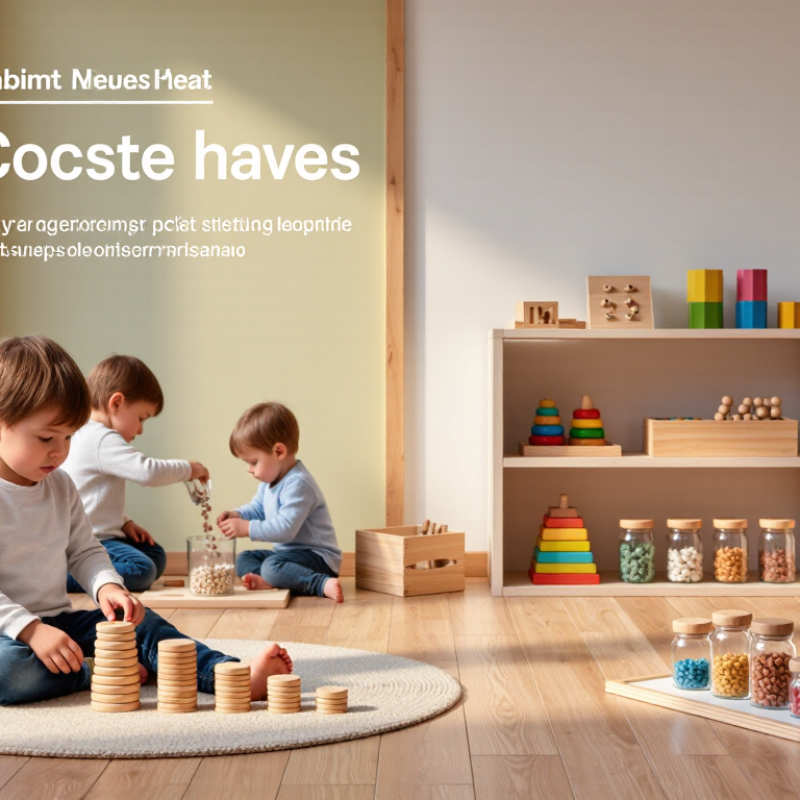
Montessori toys are simple learning materials designed for active, hands-on discovery. They often use wood, fabric, metal, or natural textures. Their purpose is not endless entertainment. A child handles, compares, sorts, builds, and notices results. A small wooden puzzle, for example, invites a child to rotate each piece until it fits. The child receives immediate feedback without an adult correcting every move.
Natural learning grows through choice, movement, and repeated practice. A carefully sized pouring set can strengthen hand control while introducing ideas about volume. Stacking blocks support balance, planning, and early mathematics. Open-ended materials, such as plain blocks or clay, encourage imagination because they do not demand one correct answer. Realistic tools can also connect play with daily life. A child may fold a cloth, button a frame, or transfer beans with a spoon.
Adults still matter. A teacher or parent can prepare a calm space, demonstrate slowly, and then step back. Observation helps reveal whether a toy is useful, too easy, or frustrating. Not every Montessori-style toy suits every child. Some children need more social play, language, or movement than one quiet activity provides. I have seen children ignore an attractive material and return to a simple container. That choice is worth respecting. Learning may look untidy, slow, or incomplete. It can still be meaningful.
Montessori toys help children build independence through hands-on exploration. A child may carry a small basket, pour beans, or fit wooden pieces into matching spaces. These simple actions create real decisions: What should I try? What went wrong? Can I try again? The adult prepares a safe environment, then steps back. That pause matters.
The American Academy of Pediatrics reported that play supports language, self-regulation, problem-solving, and executive function. Montessori materials make these skills visible. A child who struggles with a dressing frame practices finger control and persistence. A child who sorts shells by size develops early mathematical thinking. UNICEF’s 2018 Learning Through Play report also identifies active, engaged, meaningful play as essential for early learning. The evidence supports the method, but not every toy suits every child.
Independence grows slowly. Very slowly.
In practice, adults sometimes offer too much help. I have seen a child abandon a puzzle after one quick correction. Waiting ten seconds longer might have changed the experience. Still, hands-on learning is not magic. Children need clear limits, suitable difficulty, and patient observation. Research from the Harvard Center on the Developing Child connects responsive interaction and repeated practice with stronger developing skills. A carefully chosen toy can invite that practice: a quiet tray, loose parts, and enough time to explore without interruption.
| Tip | Hands-On Activity | Primary Learning Dimension | How It Builds Independence | Suitable Developmental Stage | Adult Support |
|---|---|---|---|---|---|
| 1. Choose purposeful, real-world tasks | Pouring, transferring, sorting, or simple food-preparation materials | Fine-motor control, concentration, sequencing, and practical-life skills | The child can complete a meaningful task, notice the result, and repeat it without constant direction. | Typically 2–5 years, adjusted to the child’s abilities | Demonstrate slowly, use child-sized tools, and allow safe repetition. |
| 2. Offer one clear challenge at a time | Stacking, nesting, matching, or graded-size puzzles | Visual discrimination, problem-solving, and hand–eye coordination | A simple, focused design helps the child select a strategy and self-correct through trial and error. | Typically 18 months–4 years | Present the material in order of difficulty and avoid solving it too quickly. |
| 3. Let the child control the pace | Open-ended building, arranging, or repeated manipulation of natural materials | Attention, persistence, creativity, and self-regulation | Choosing when to begin, pause, repeat, or finish supports ownership of the learning process. | Typically 2–6 years | Keep the environment calm, limit interruptions, and observe before intervening. |
| 4. Use materials with built-in feedback | Shape, size, color, or quantity-matching materials that visibly show a mismatch | Self-assessment, reasoning, and error correction | The child can identify and correct an error independently instead of waiting for adult approval. | Typically 2–6 years | Ask, “What do you notice?” rather than immediately giving the answer. |
| 5. Connect movement with thinking | Threading, fastening, carrying, balancing, or transferring objects | Gross- and fine-motor development, coordination, and body awareness | Practicing controlled movements helps children manage everyday actions such as dressing, tidying, and handling tools. | Typically 2–5 years | Provide stable furniture, adequate space, and materials that are safe to handle. |
| 6. Encourage language through exploration | Object-matching, texture exploration, classification, and picture-to-object activities | Vocabulary, categorization, sensory awareness, and communication | Children learn to describe what they see, make choices, and communicate needs during independent work. | Typically 2–6 years | Introduce precise, simple words and give the child time to respond. |
| 7. Make order and care part of the routine | A small shelf with complete activity sets, trays, baskets, and cleaning tools | Organization, executive function, responsibility, and decision-making | Returning materials to a known place helps children plan, finish, and prepare the environment for the next activity. | Typically 2–6 years | Display only a manageable number of choices and model a consistent cleanup routine. |
Practical note: Developmental stages are approximate. Select materials according to the child’s individual motor abilities, interests, safety needs, and level of supervision.
7 Tips: How Montessori Toys Help Children Learn Naturally
How Open-Ended Play Develops Creativity and Problem-Solving Skills
Open-ended play gives children room to decide what an object can become. A set of wooden blocks may turn into a bridge, animal shelter, or shop counter. There is no single correct answer. This freedom encourages children to test ideas, change plans, and explain their choices. The American Academy of Pediatrics links play with executive function, language, and social development. These skills support problem-solving beyond the playroom.
The 2022 Play Well Study surveyed more than 57,000 parents and children across 17 countries. Its findings highlighted strong parental belief in play’s role in developing life skills. Educators can support this process by offering simple, adaptable materials. Try blocks, fabric pieces, nesting containers, and safe household objects. Ask, “What could you try next?” instead of solving the problem immediately. Small pauses matter.
Open-ended toys also make learning visible. A child may discover that a tall tower needs a wider base after it falls. That moment teaches balance, prediction, and persistence. However, not every minimalist toy automatically creates meaningful learning. Adult guidance still matters, especially when frustration becomes overwhelming. I sometimes expect children to invent endlessly, but some need a starting idea. A picture, question, or gentle challenge can open the door. The best play may look messy, slow, and unfinished.
Open-ended play supports creativity, self-regulation, problem-solving, and social understanding.
Open-ended materials allow children to choose goals, test ideas, repeat actions, and correct mistakes independently. These features are consistent with research showing positive Montessori-related outcomes in executive function, academic skills, and social cognition.
Data shown are standardized mean differences reported in the review by Lillard et al. (2017), comparing Montessori education with conventional education. Positive values indicate stronger outcomes for Montessori participants. Source: Science, 2017.
Montessori toys can strengthen focus, coordination, and practical life skills through purposeful, hands-on play. A child may pour dry beans between two small cups, watching each movement carefully. This simple activity builds concentration, hand control, and early problem-solving. When pieces fit only one way, children receive immediate feedback without depending on adult correction. Quiet repetition matters.
Threading beads, arranging wooden shapes, and using child-sized tools support hand-eye coordination. These movements prepare children for writing, dressing, and eating independently. A dressing frame with buttons or zippers turns a daily challenge into manageable practice. Educators often recommend limited choices, because too many toys can weaken attention. Two carefully selected activities may be enough.
Practical learning feels real. A child wiping a small spill learns responsibility, balance, and patience. The result may look uneven. That is acceptable. Still, Montessori toys are not magic solutions. Some children need more movement, social play, or direct guidance. Adults should observe rather than interrupt every attempt, while offering calm help when frustration grows. Choose materials suited to the child’s age, abilities, and safety needs. I have noticed that children sometimes reject a carefully prepared activity, and that response deserves attention. Their interest, not the toy’s appearance, should guide the next invitation.
A toddler may enjoy stacking rings, while an older child may need sorting or simple counting materials.
Too many sounds, buttons, and colors can distract from careful exploration. Simple designs often invite longer focus.
Blocks, wooden shapes, puzzles, and practical-life tools can support problem-solving without demanding one correct answer.
Textured objects may support sensory discovery, while threading or grasping activities can strengthen hand control. Keep pieces large enough for young children and inspect them regularly.
A toy that seems educational may sit untouched. That is useful information, not failure.
In classrooms, children often concentrate better when shelves are calm and uncluttered. Adults should demonstrate slowly, then step back.
Children learn naturally when they can carry, choose, repeat, and correct small mistakes. Some materials may be too difficult, even when labeled for a suitable age. Adjust the activity, and rethink the choice when needed.
They support hands-on discovery through sorting, building, comparing, and repeated practice. A child learns by handling materials and noticing results. Quiet work matters.
Simple activities encourage children to focus on one clear task. Pouring beans between cups requires slow movements and careful attention. Repetition builds patience.
Children may practice buttoning, folding cloth, transferring objects, and wiping small spills. These tasks strengthen coordination, balance, responsibility, and independence. The result may look uneven.
Adults can prepare a calm space and demonstrate each action slowly. They should then step back and observe. Help is useful when frustration grows.
Ability matters more than age alone. A toddler may need stacking rings, while an older child may enjoy sorting or counting. Labels can still be imperfect.
Simple toys reduce distractions from loud sounds, bright buttons, and excessive choices. Plain blocks may encourage building, planning, and imagination. Less can be more.
Treat the response as useful information, not failure. The child may prefer a simple container or need more movement. Interest should guide the next activity.
Choose durable materials with pieces suited to the child’s abilities. Inspect items regularly for damage, and avoid pieces that create safety risks. Supervision remains important.
Montessori toys are thoughtfully designed materials that invite children to learn through active discovery rather than passive instruction. They encourage children to handle, sort, build, match, and experiment at their own pace. So, how do montessori toys help children learn naturally? By giving children meaningful choices and opportunities to repeat activities, these toys support independence, curiosity, and confidence. Open-ended materials also allow children to create different solutions, strengthening imagination, flexible thinking, and problem-solving skills.
Through hands-on play, children gradually improve concentration, hand-eye coordination, fine motor control, and practical life abilities such as organizing, transferring, and caring for their surroundings. The best choice depends on a child’s age, interests, abilities, and developmental needs. Simple sensory materials may suit younger children, while older children can benefit from activities involving sequencing, construction, counting, or real-life tasks. With an appropriate level of challenge and freedom to explore, Montessori toys make learning a natural, engaging, and purposeful part of everyday play.
